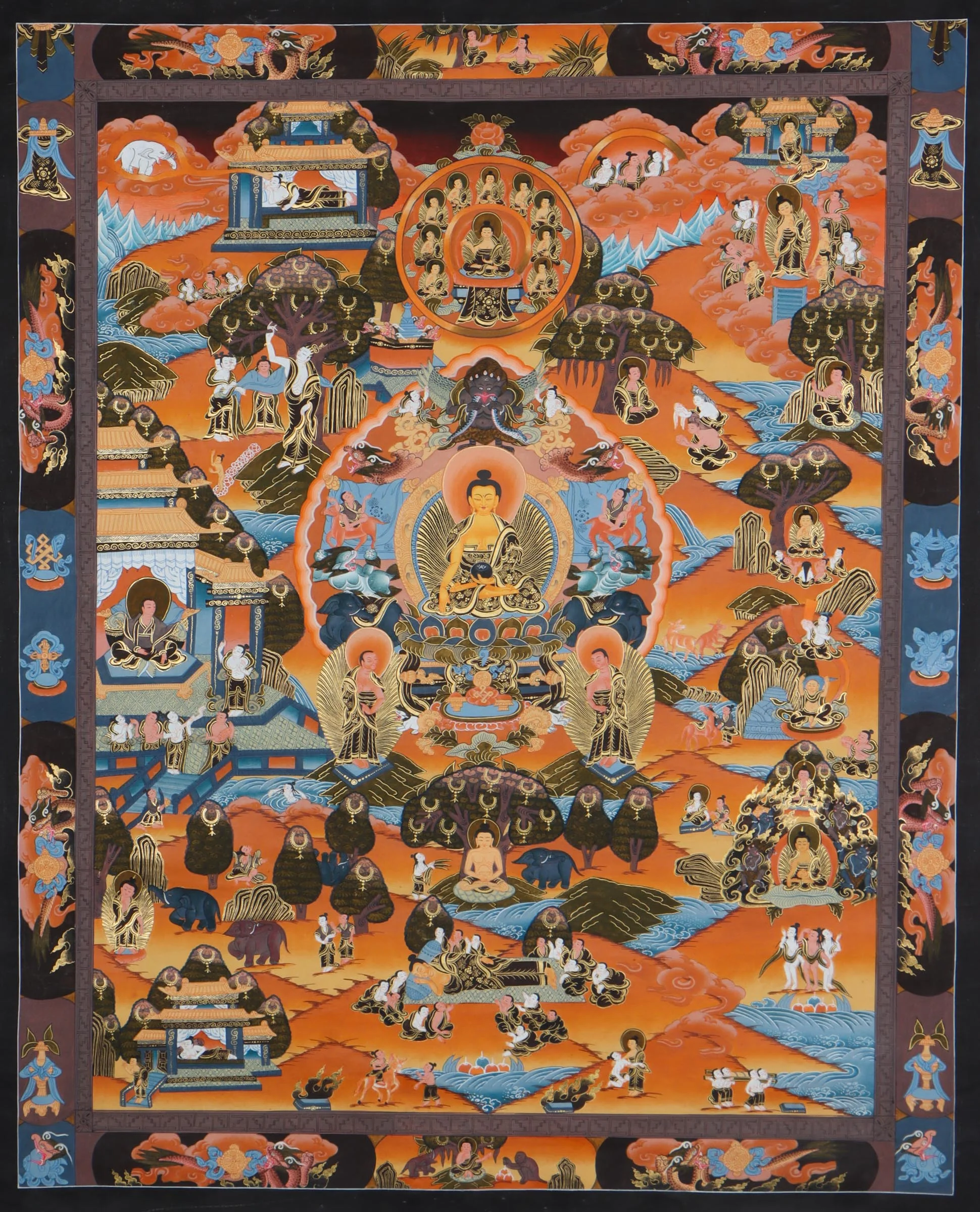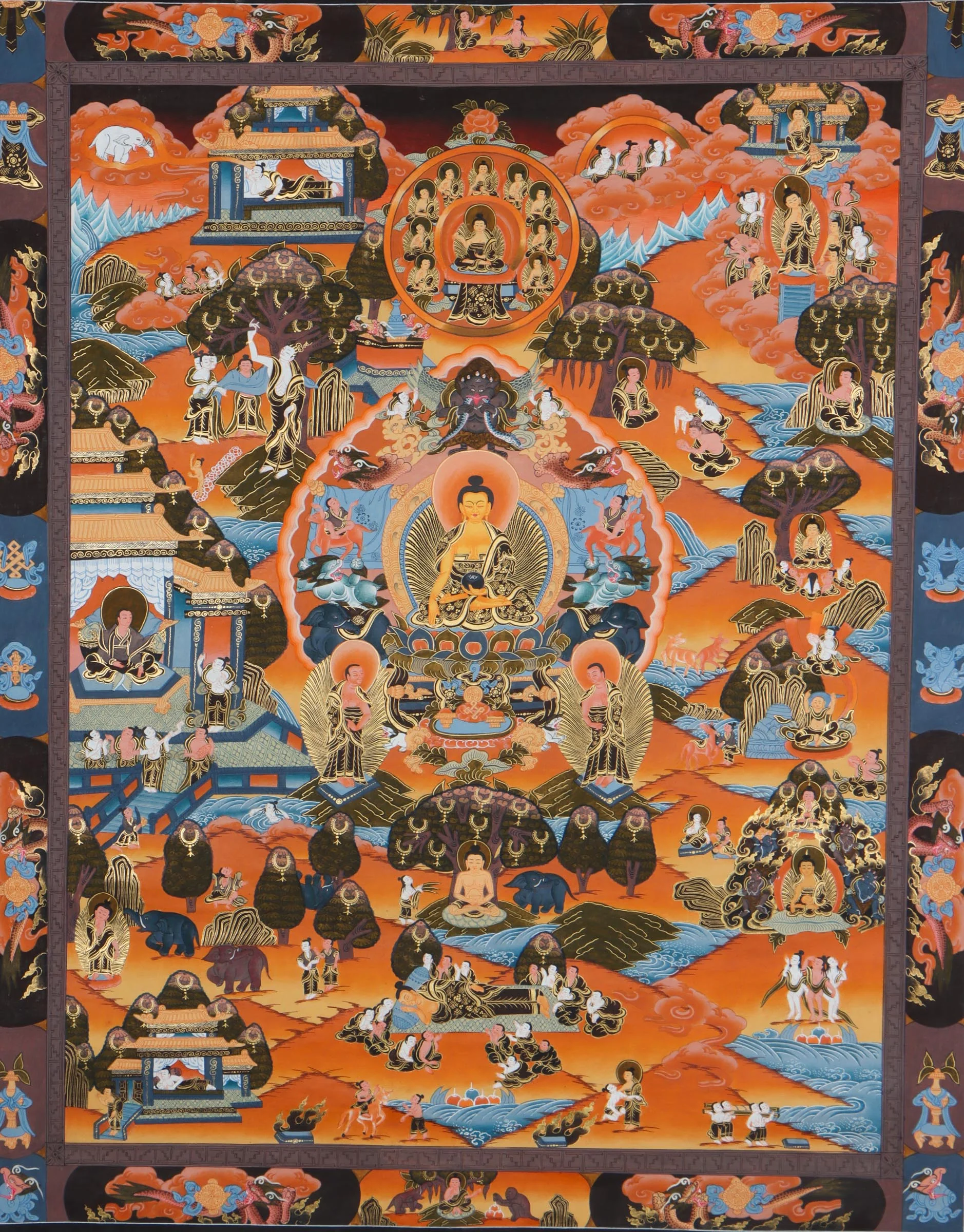
Shiva Shakti Thangka
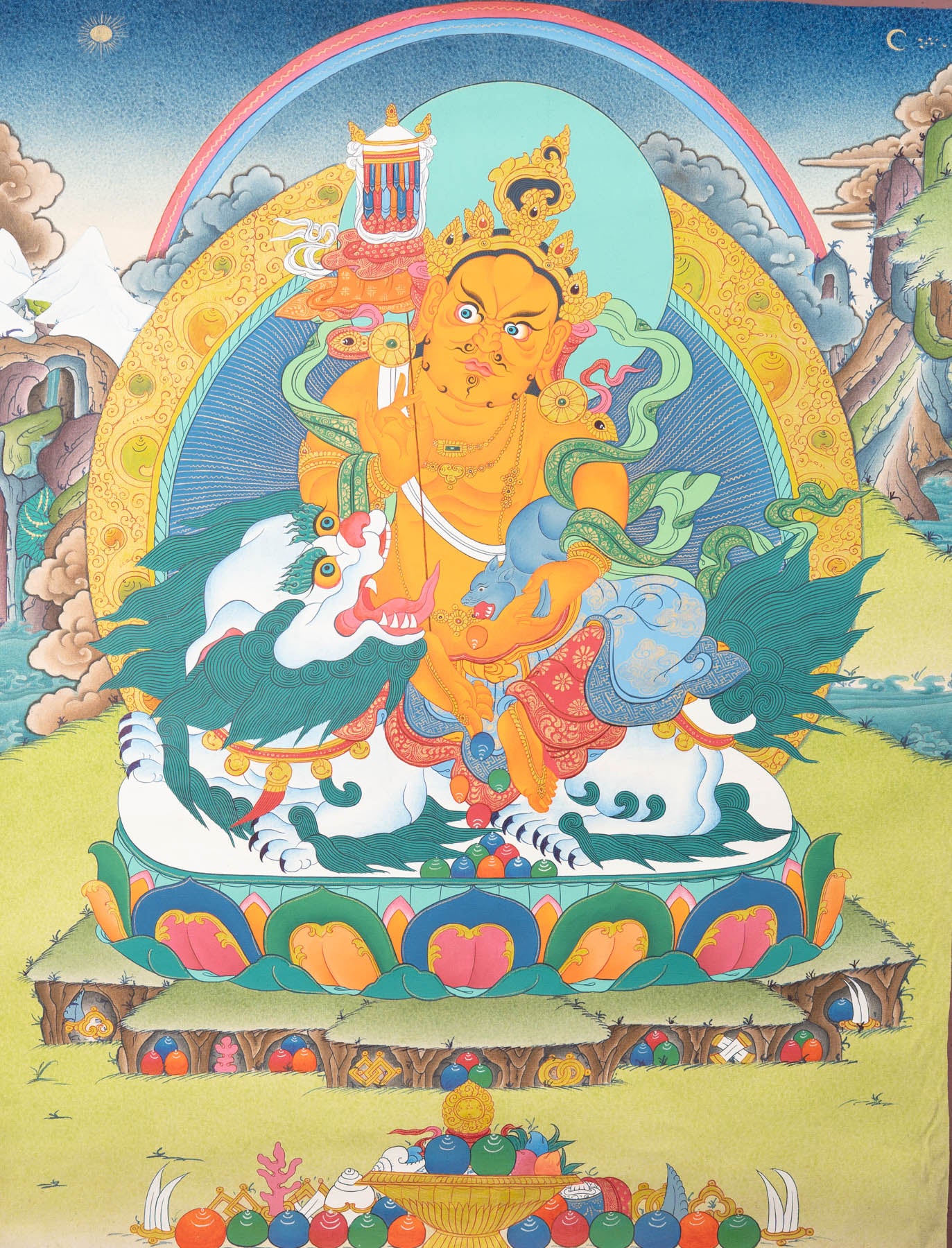
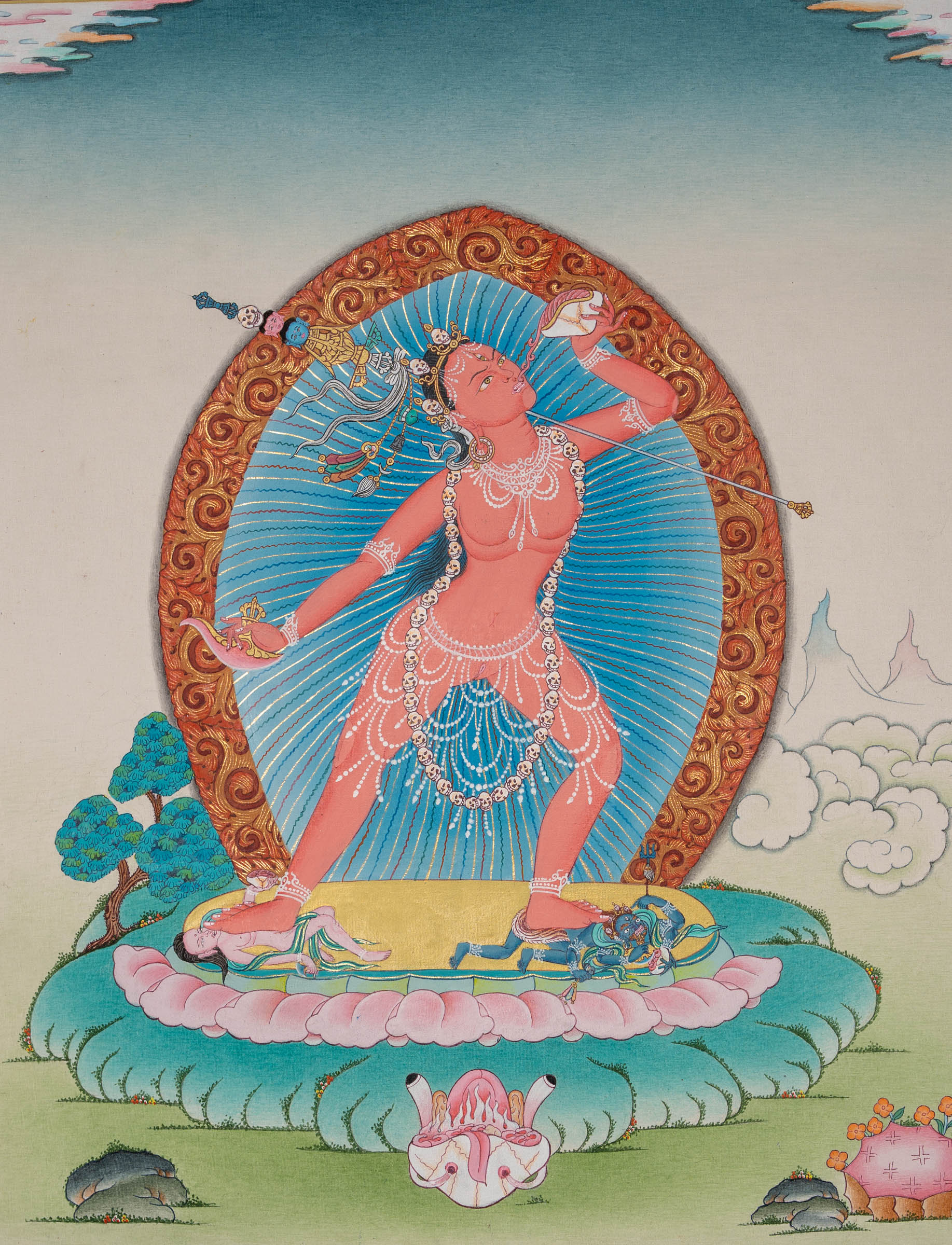
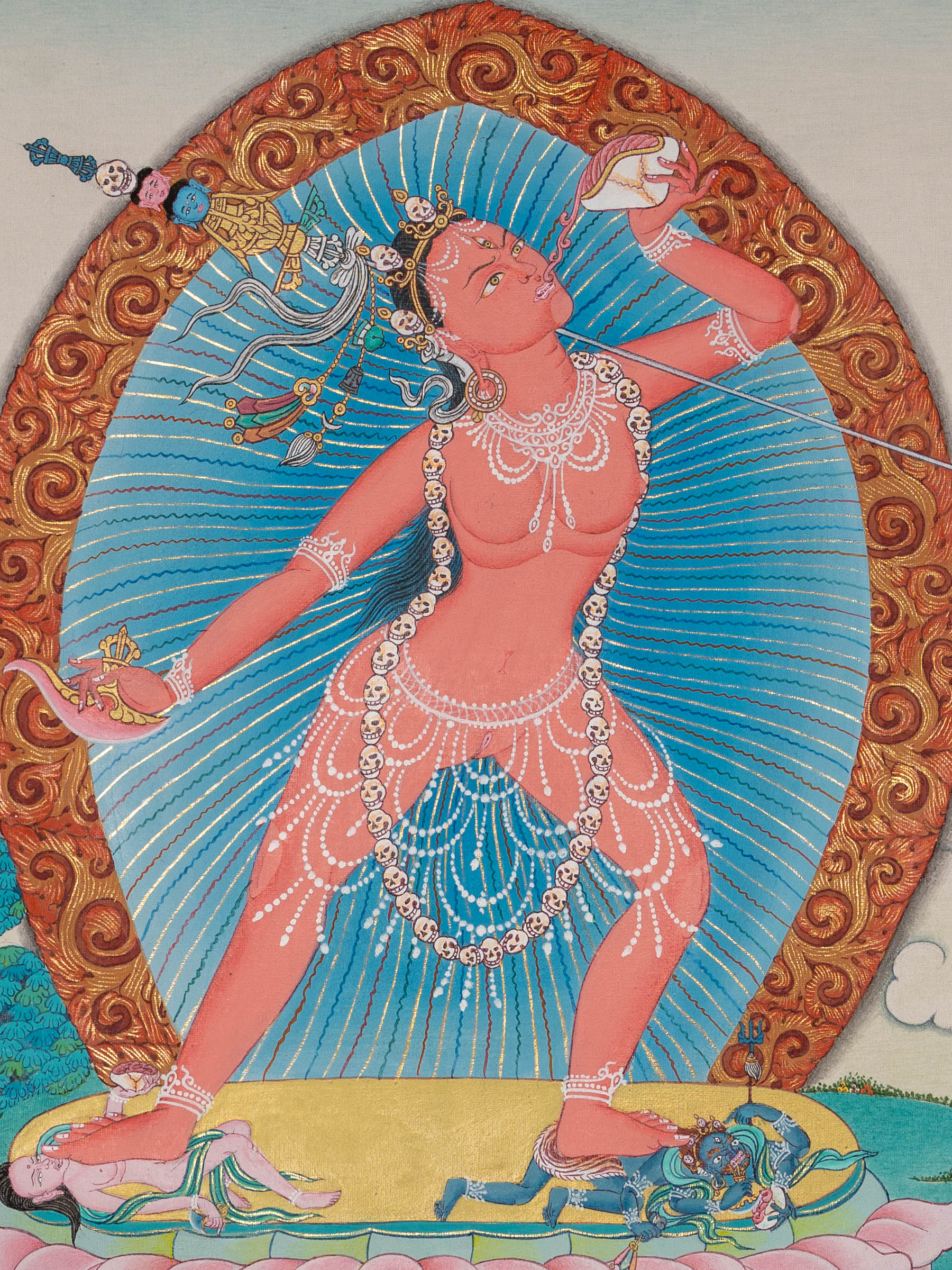
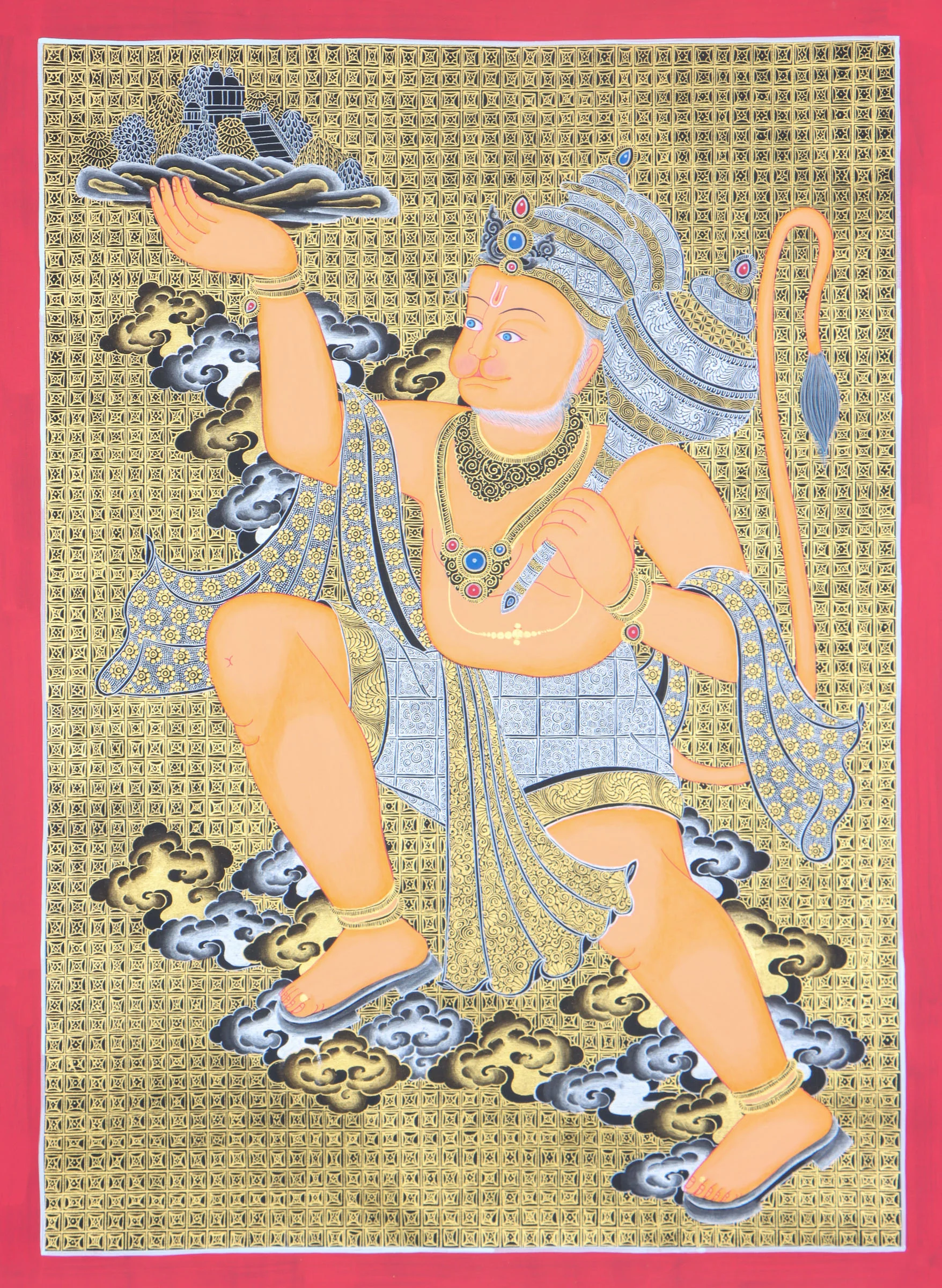
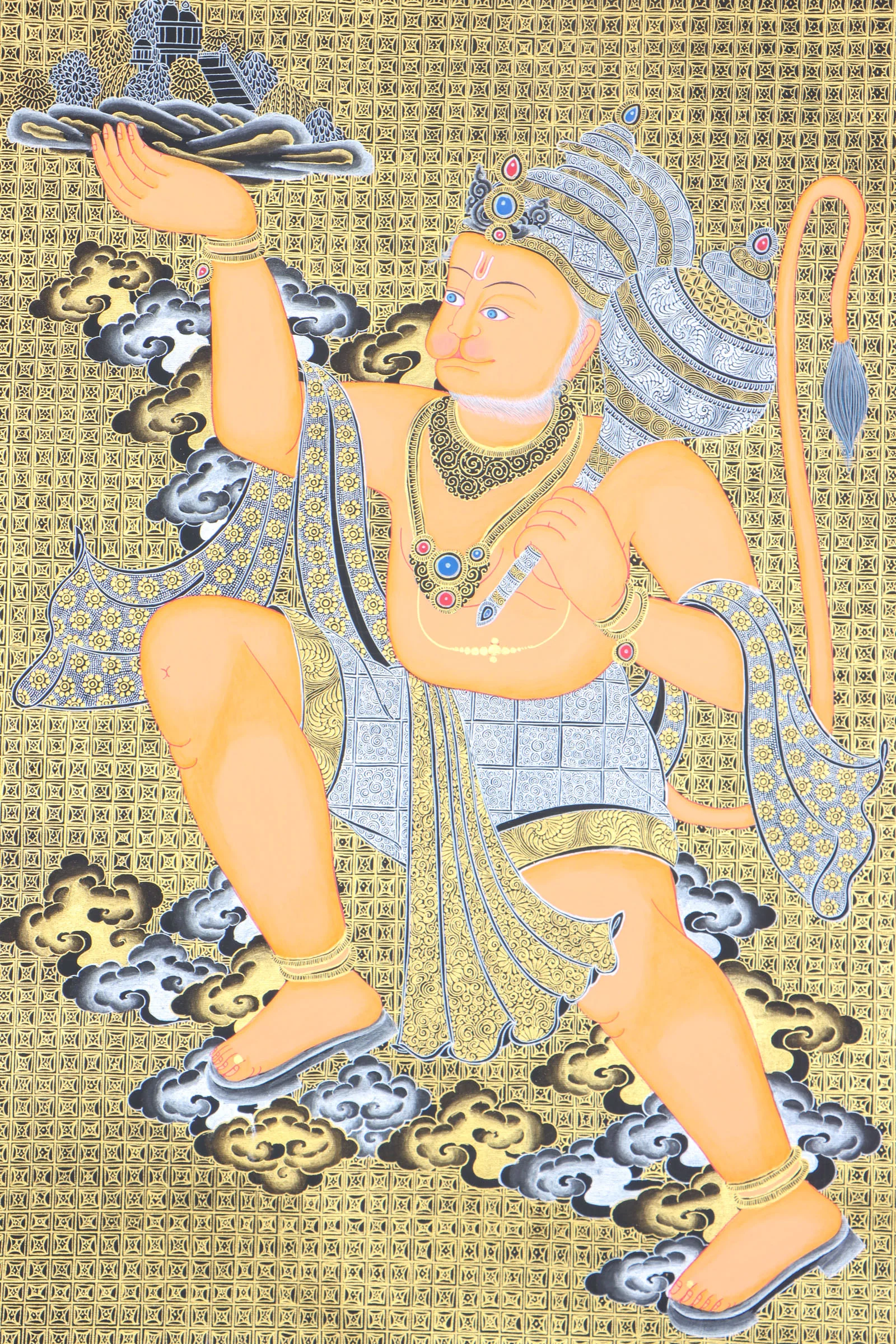
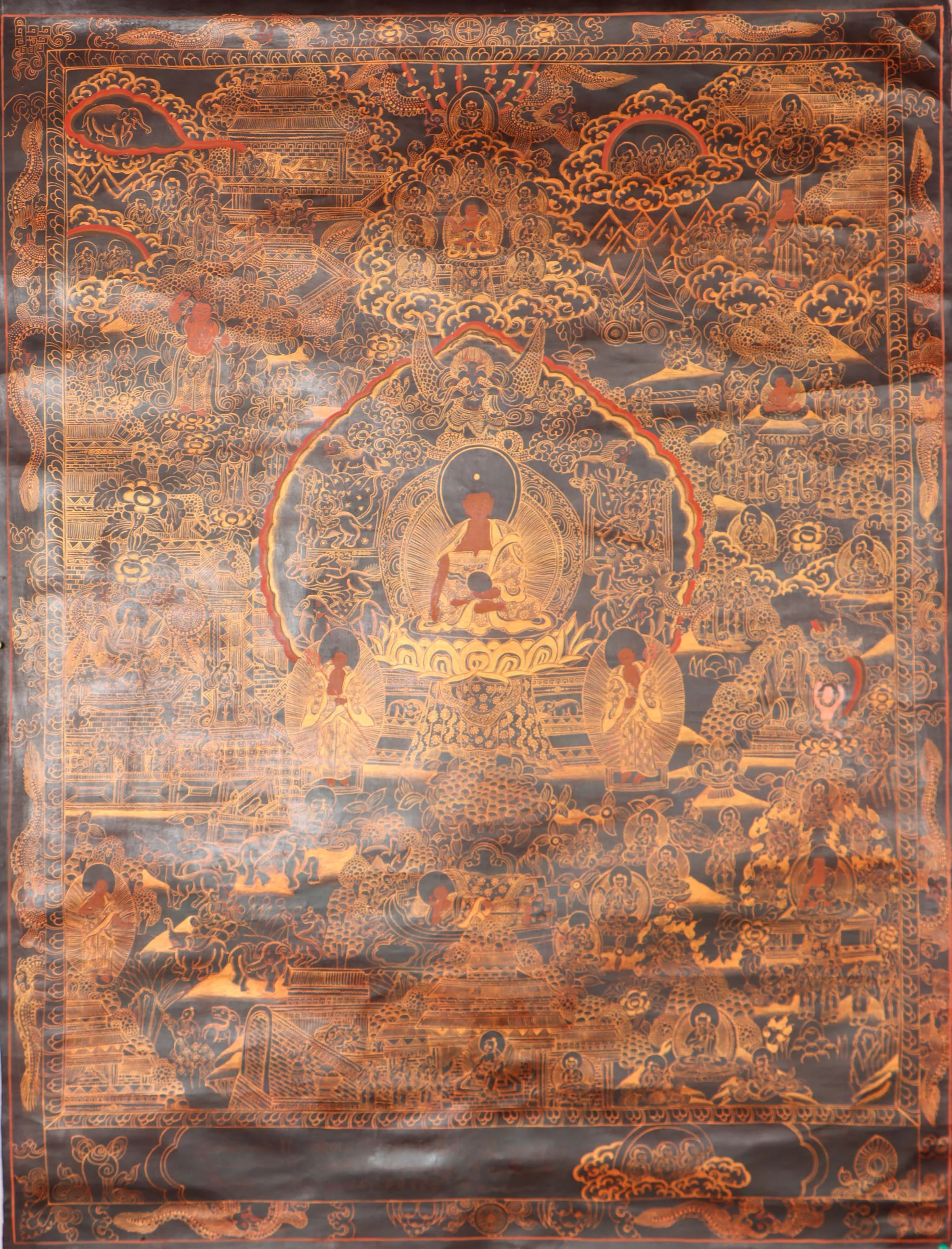
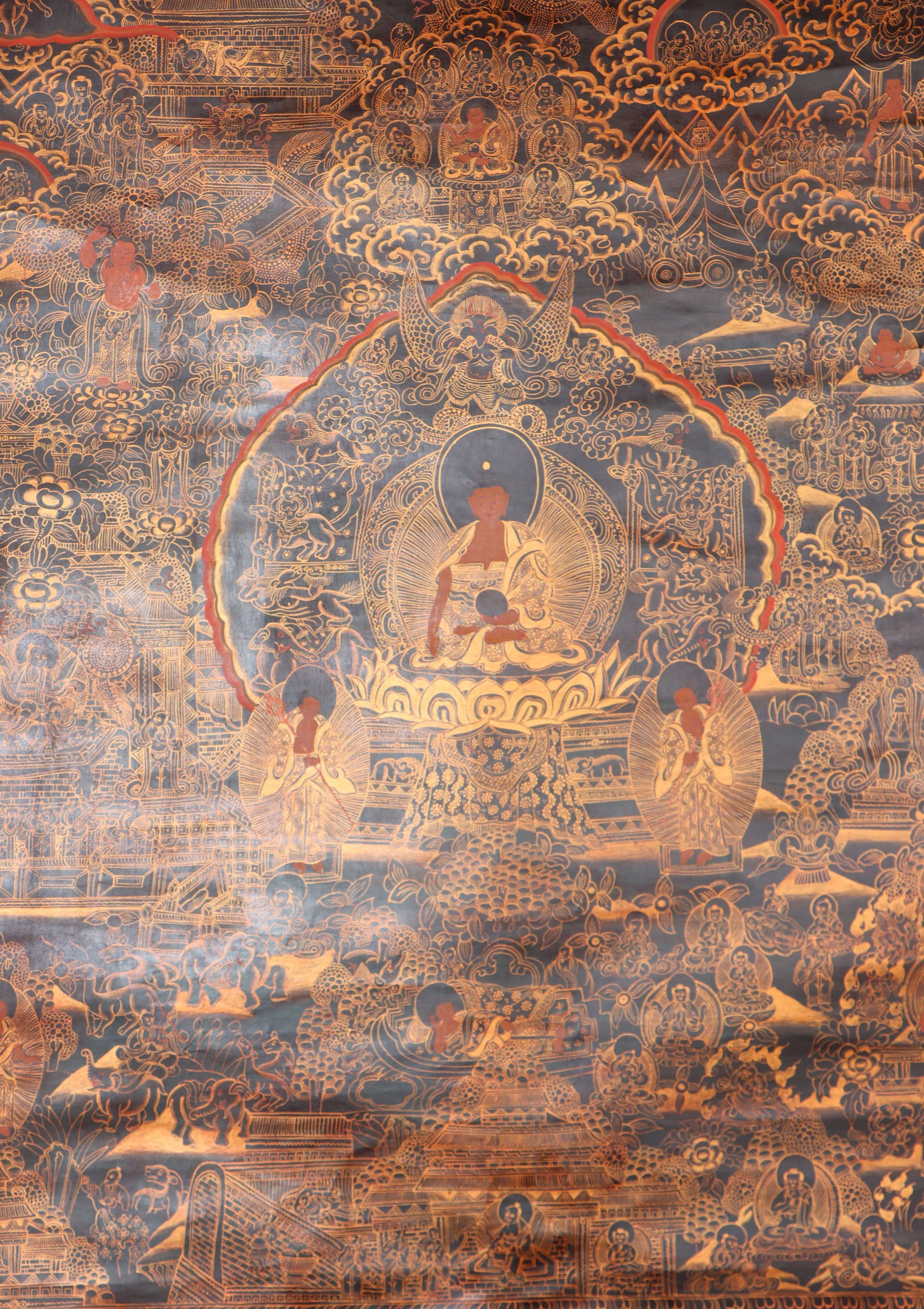
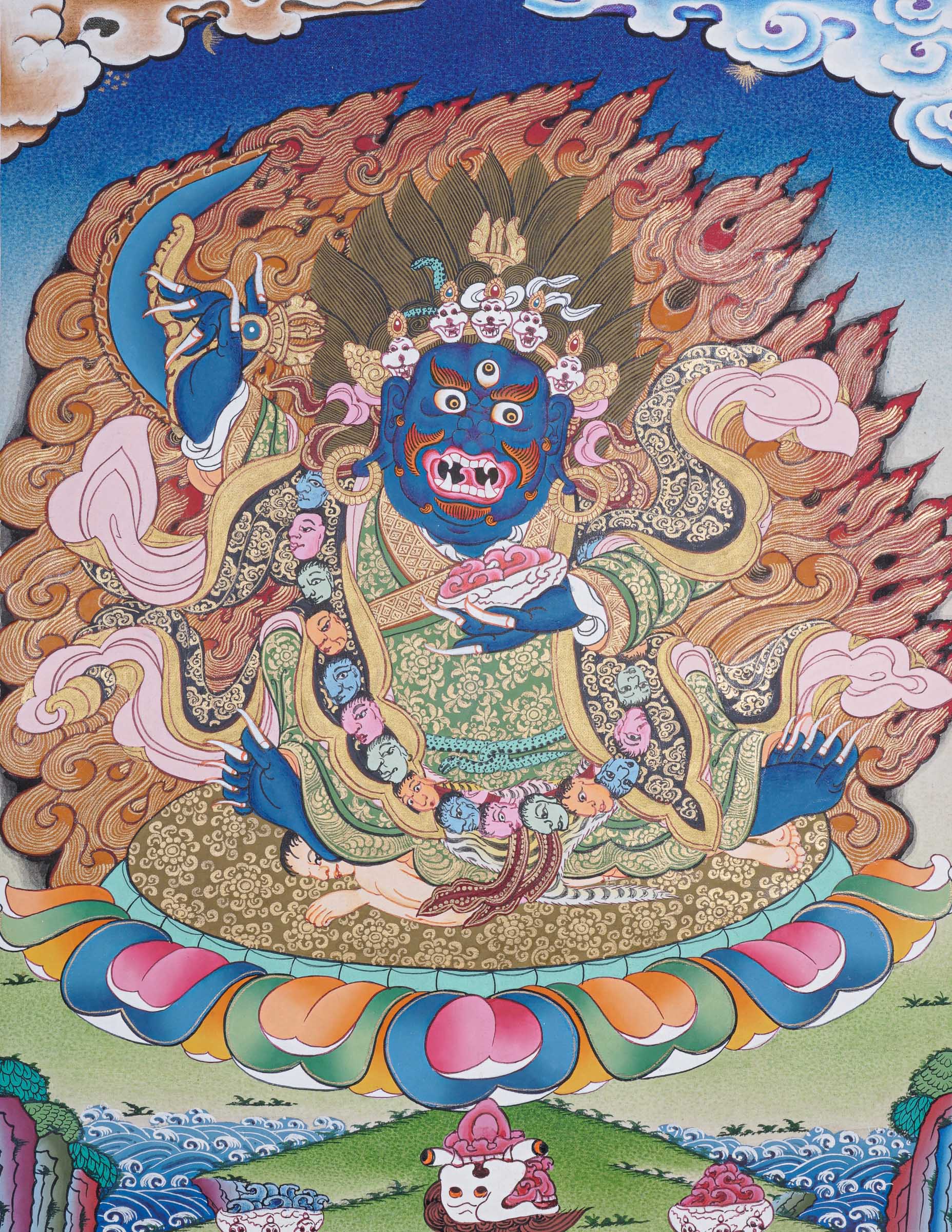
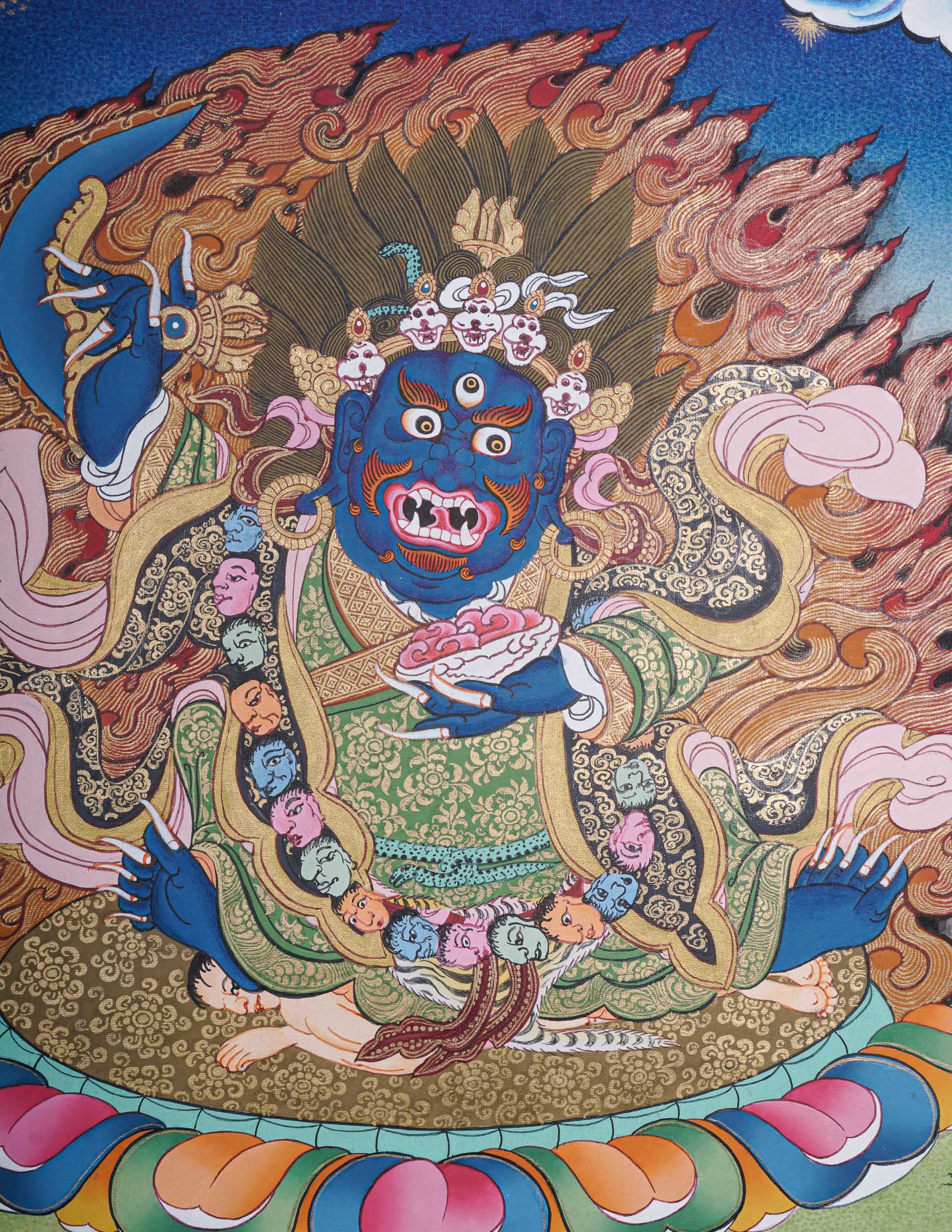
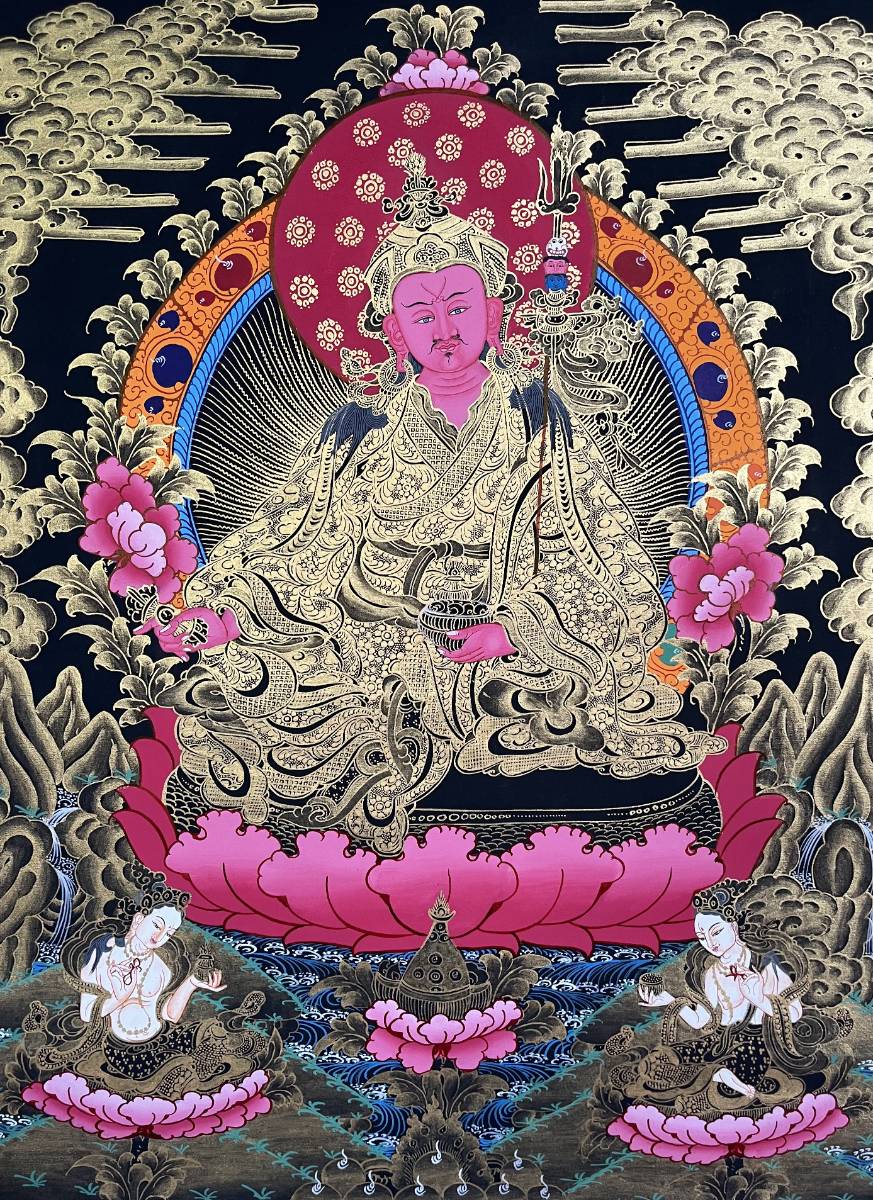
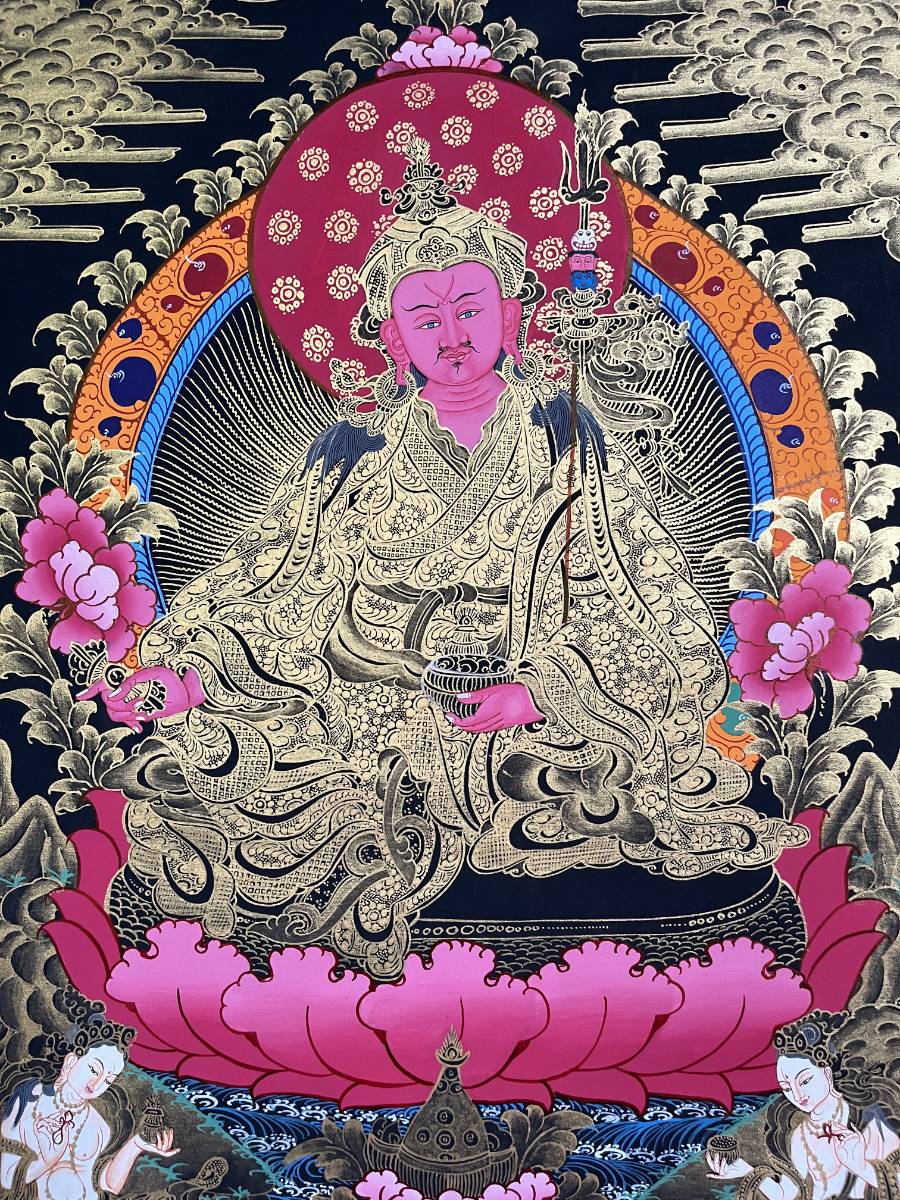
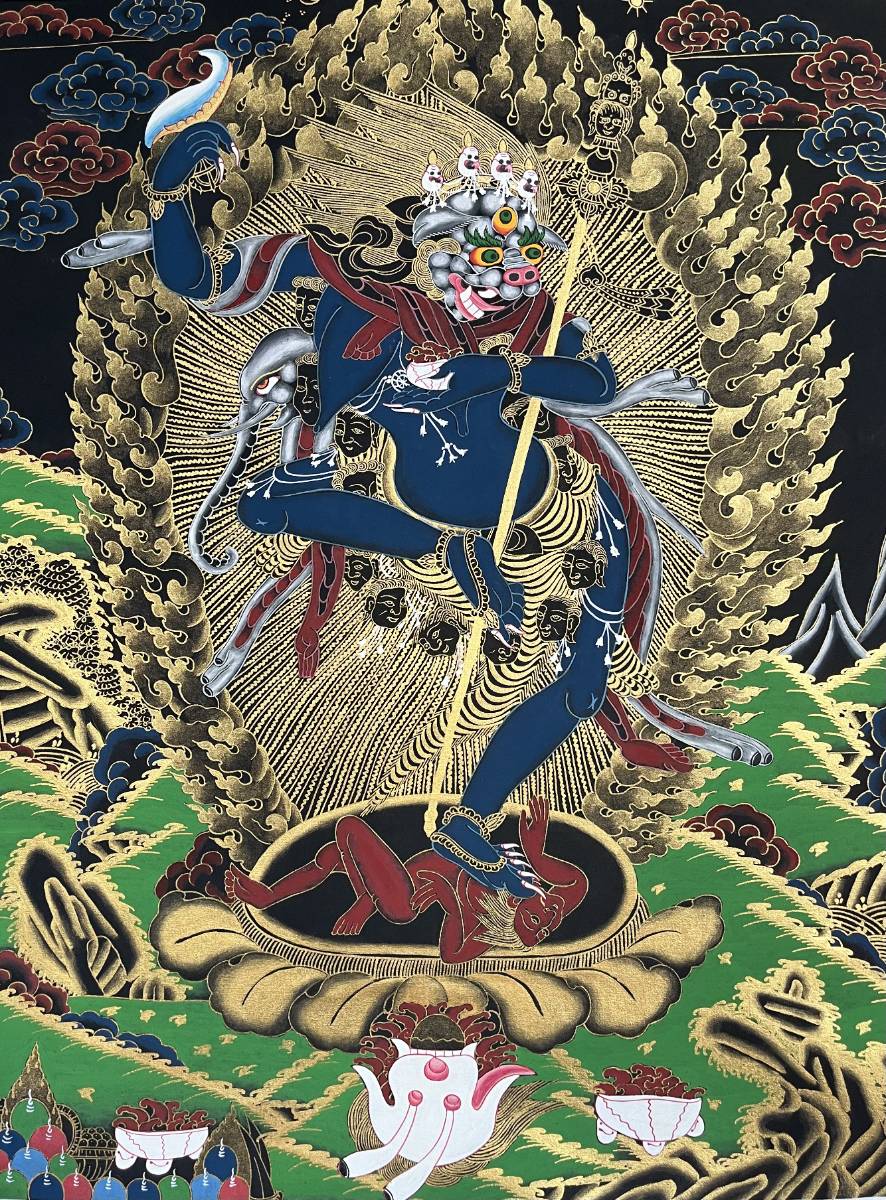
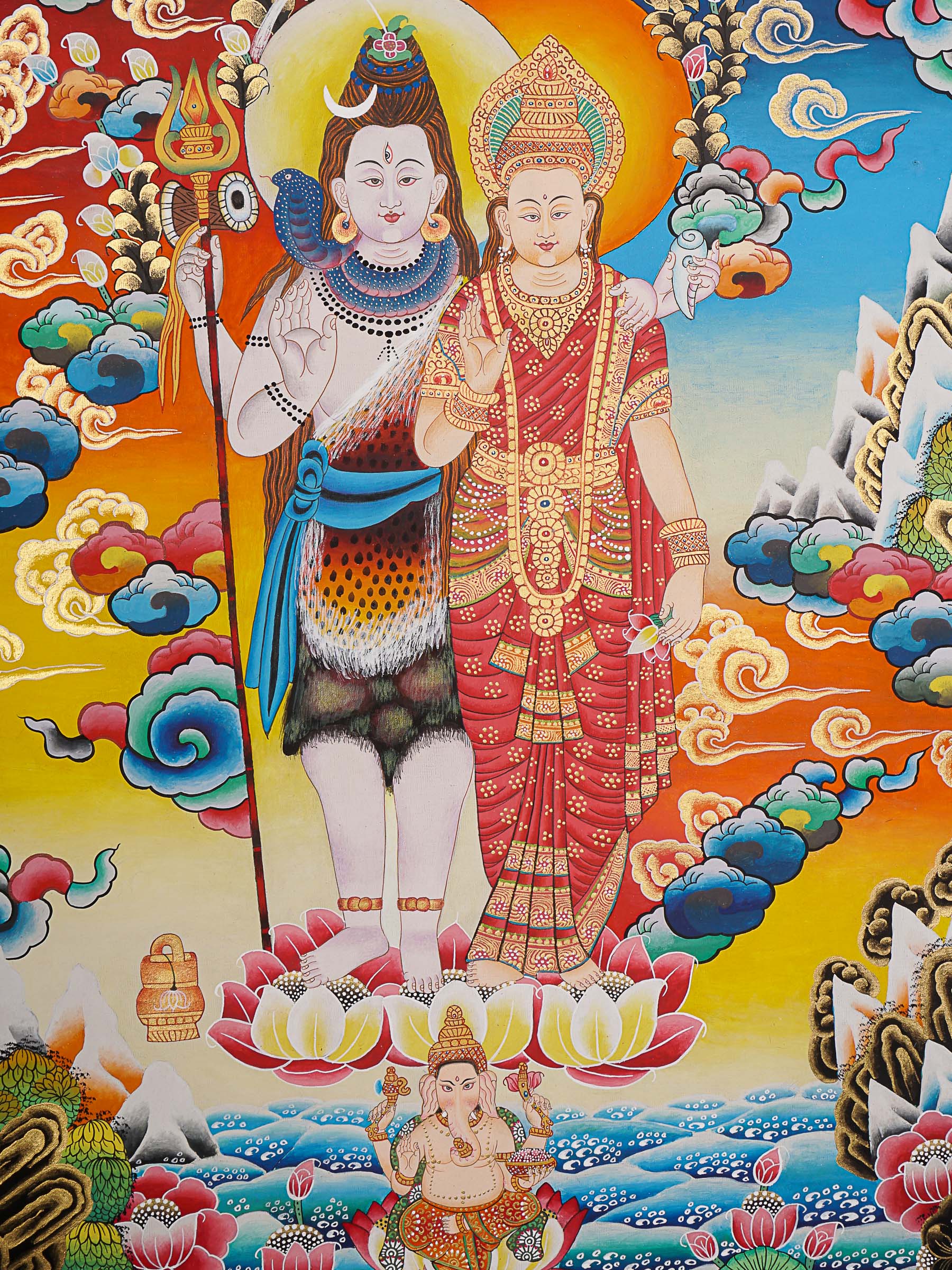
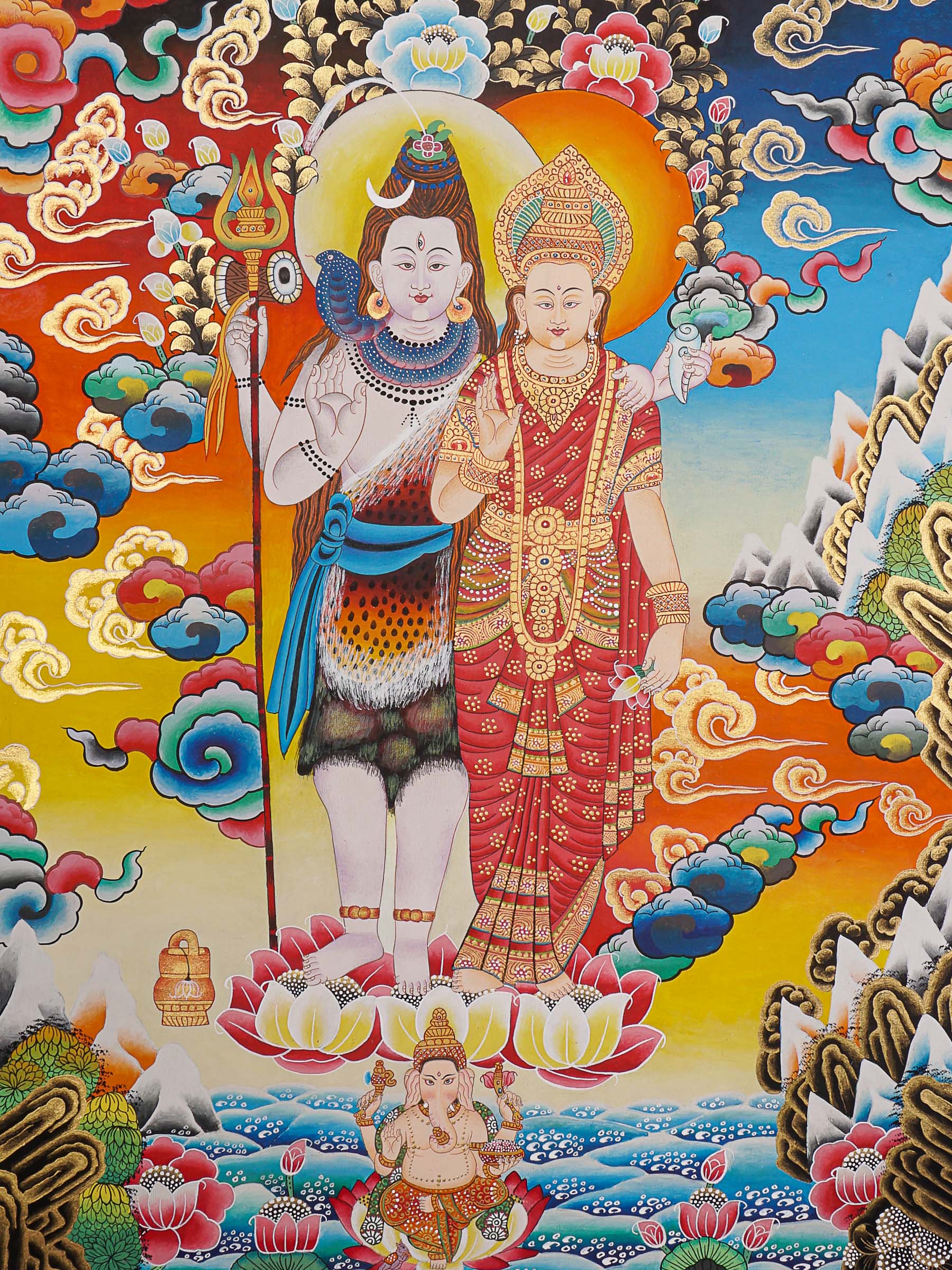
The Shiva Shakti Thangka is a revered piece of art portraying the divine union of Shiva and Shakti according to the Tibetan Buddhist customs. This traditional depiction serves as a representation of the harmonious equilibrium between masculine and feminine forces, with Shiva representing destruction and transformation while Shakti symbolizes creativity and vitality.
Key Features:
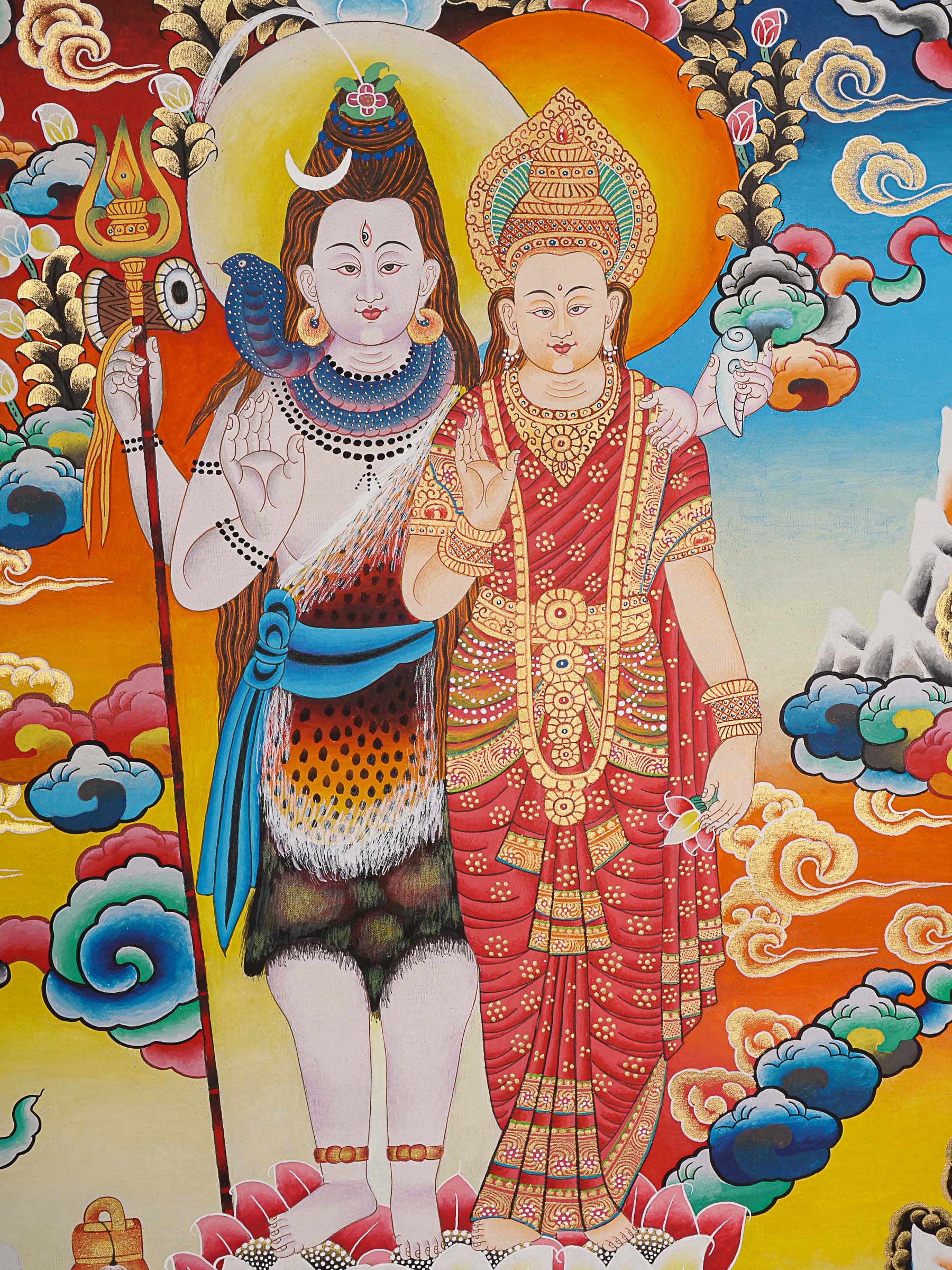
- Central Figures - Shiva and Shakti: The painting highlights the beloved Shiva and Shakti in a loving embrace, representing their inseparable and complementary bond. Shiva has a serene and calm appearance, while Shakti radiates with lively energy.
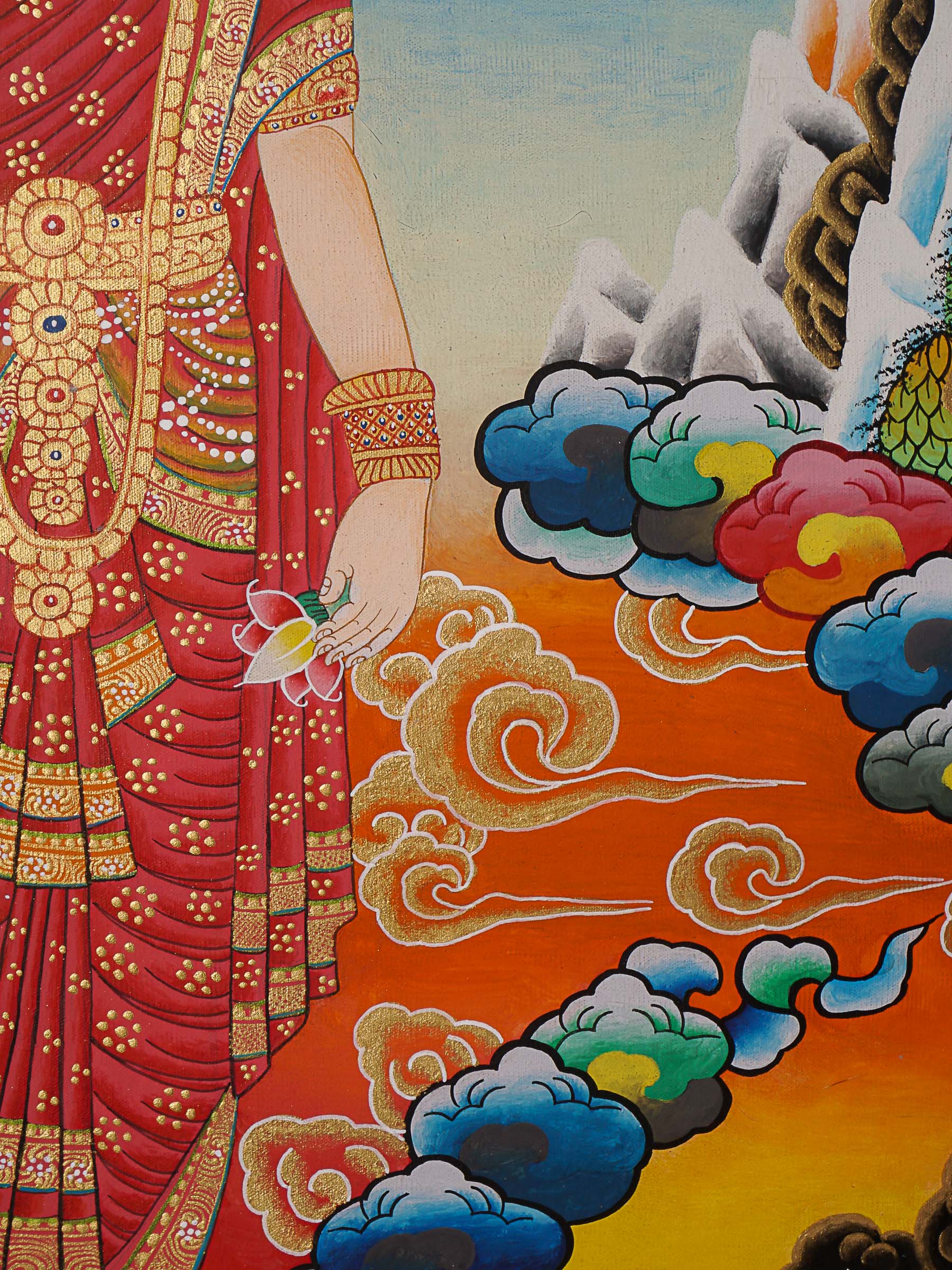
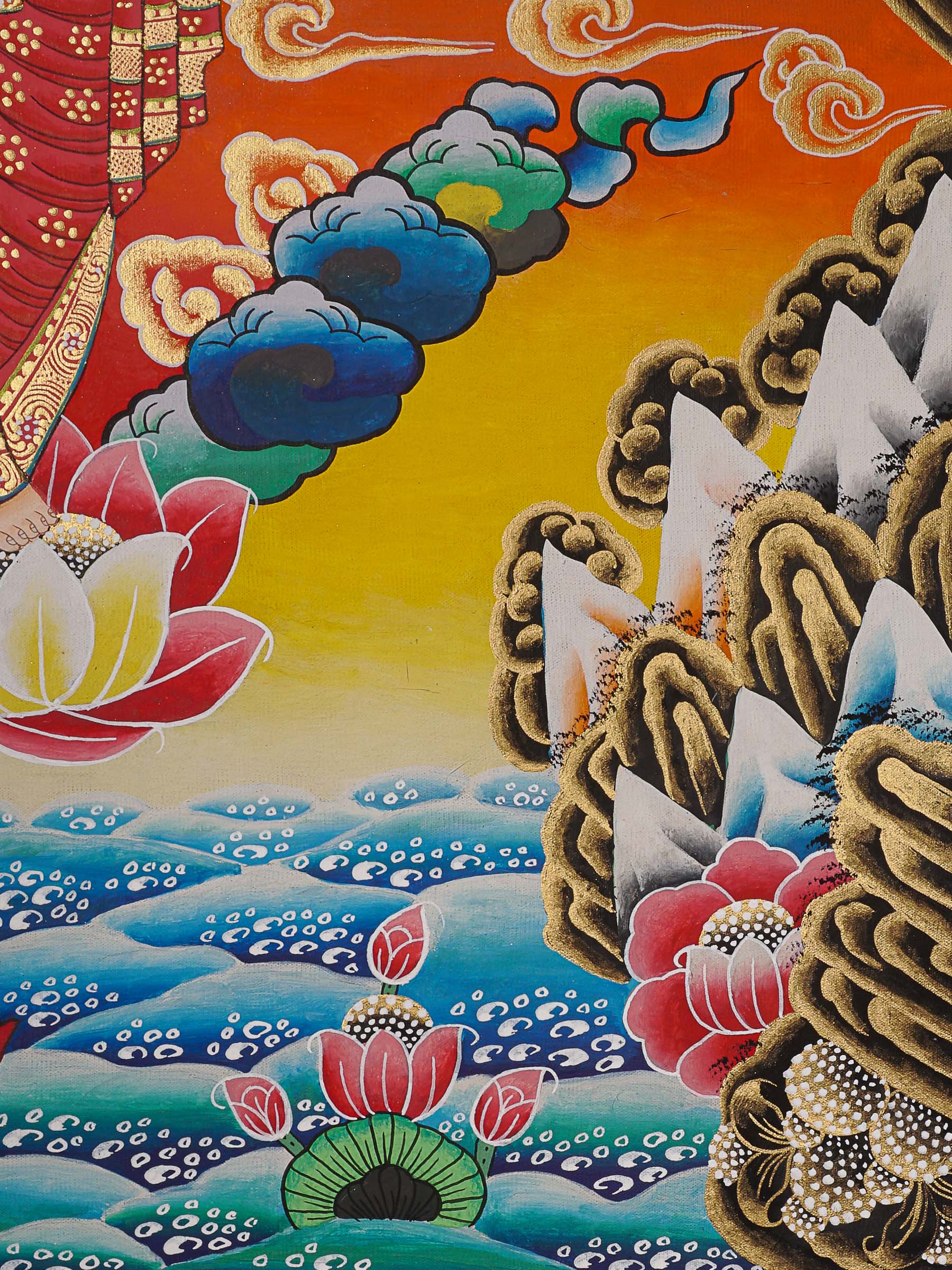
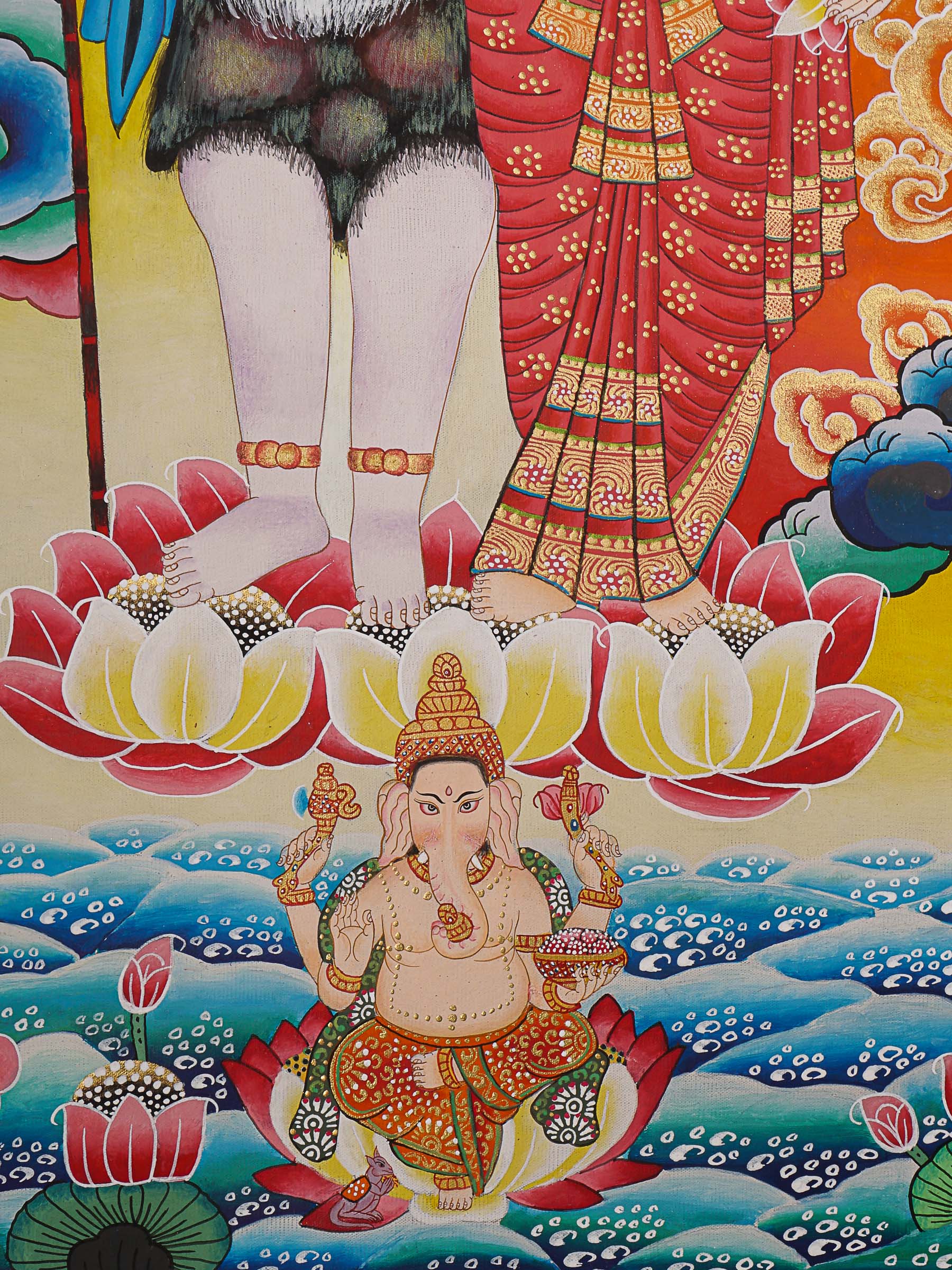
- Lotus Throne:Both figures are depicted standing on a lotus throne, representing purity, enlightenment, and the progression of spiritual awareness.
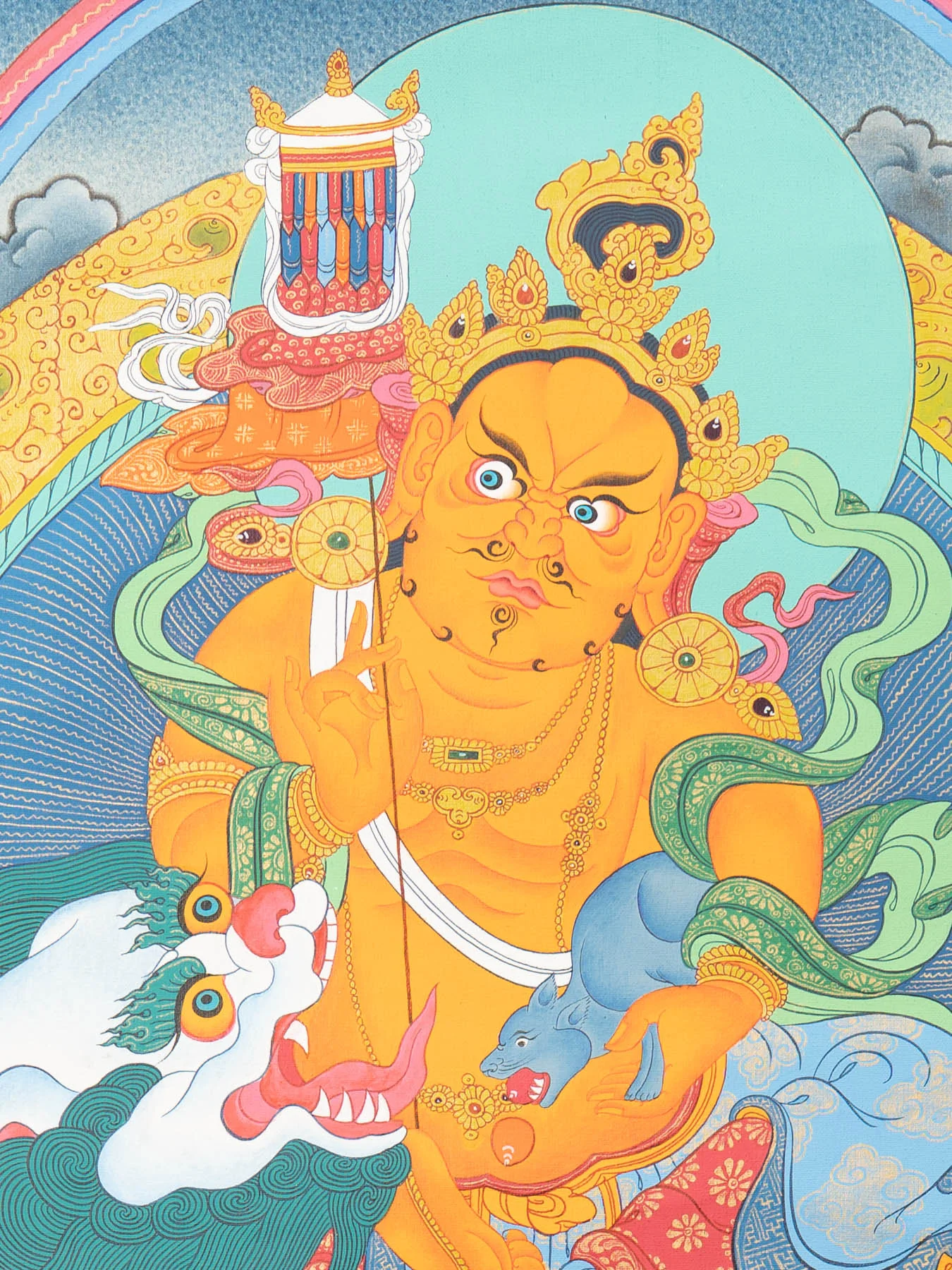
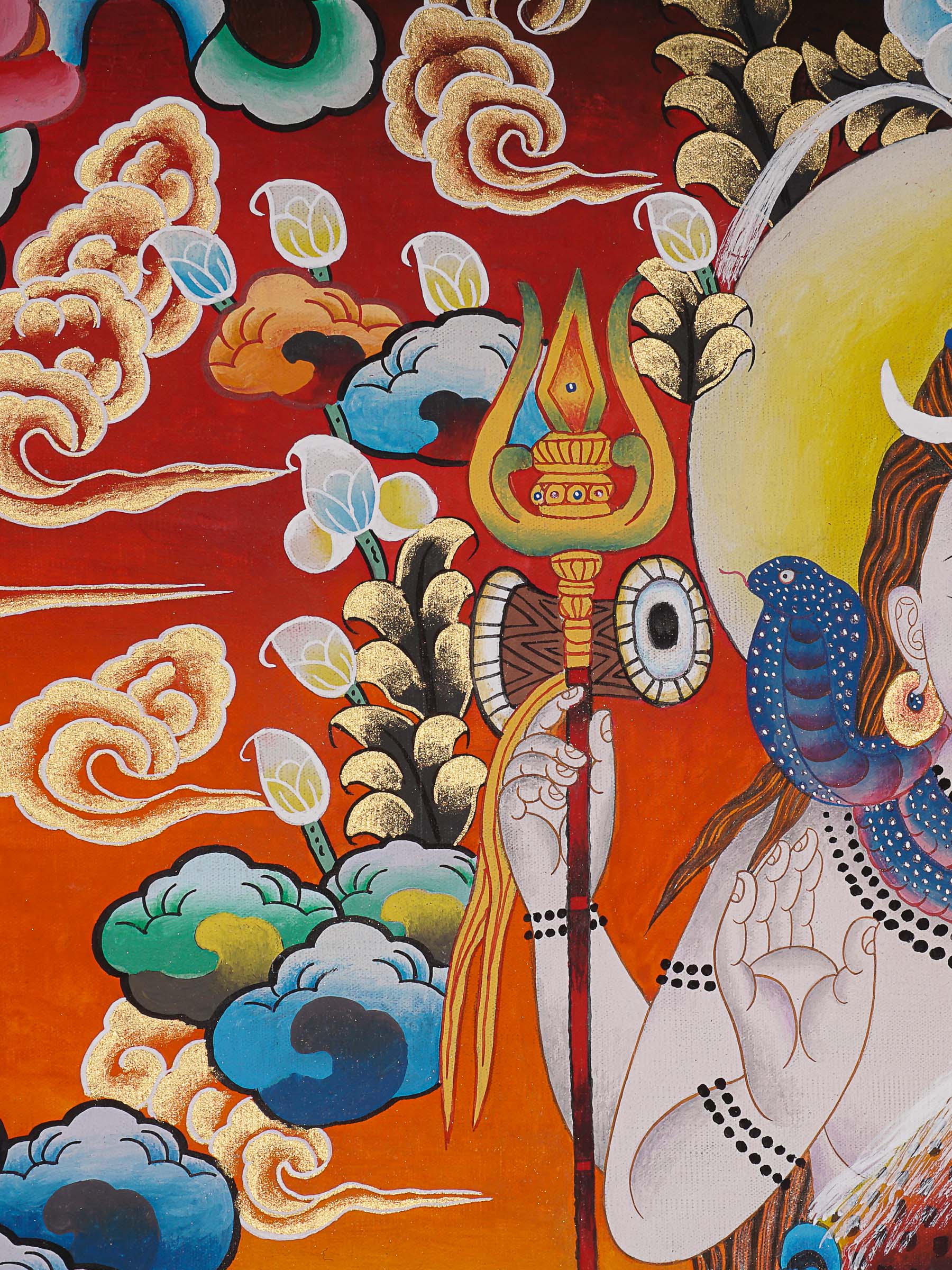
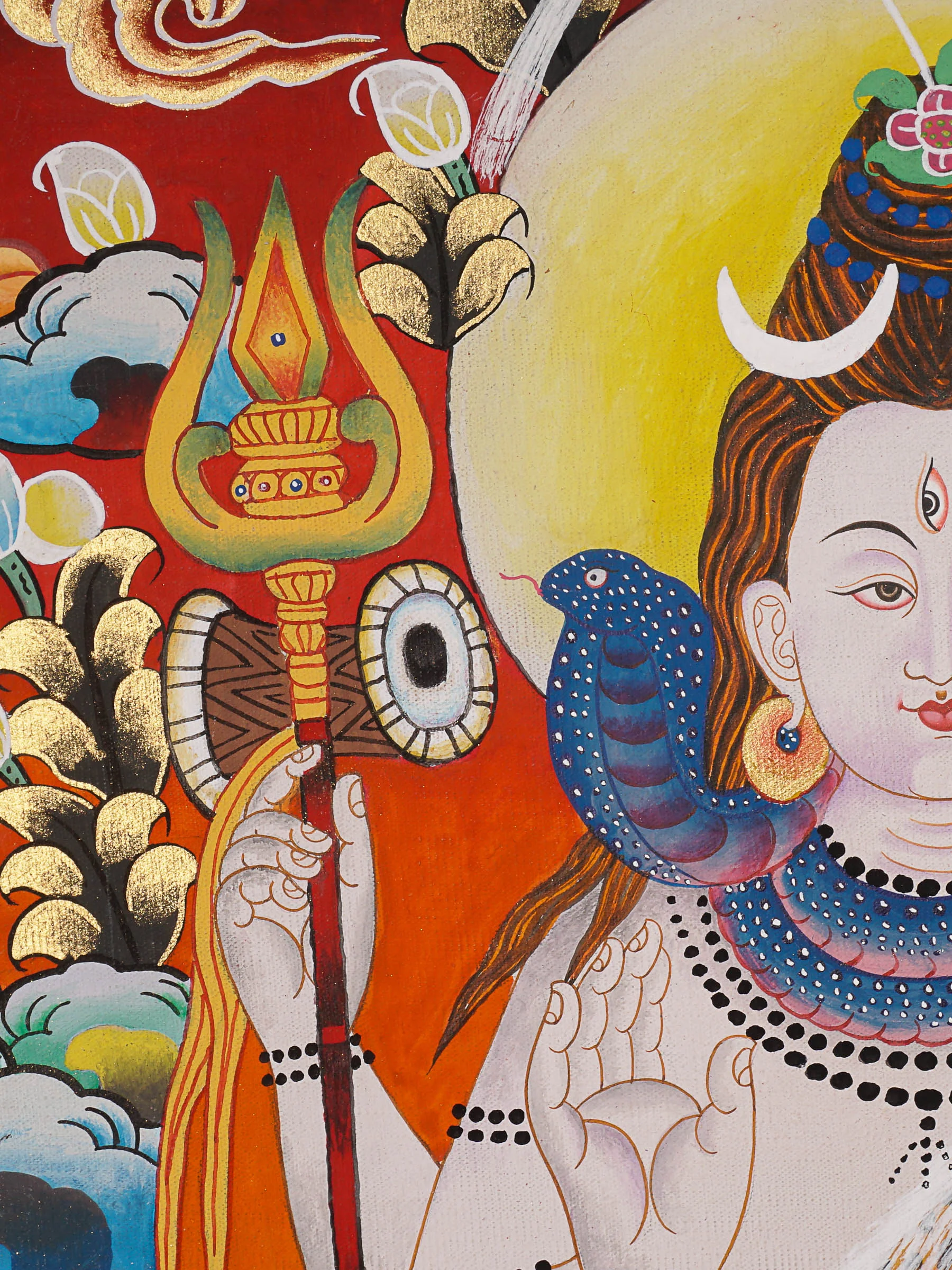
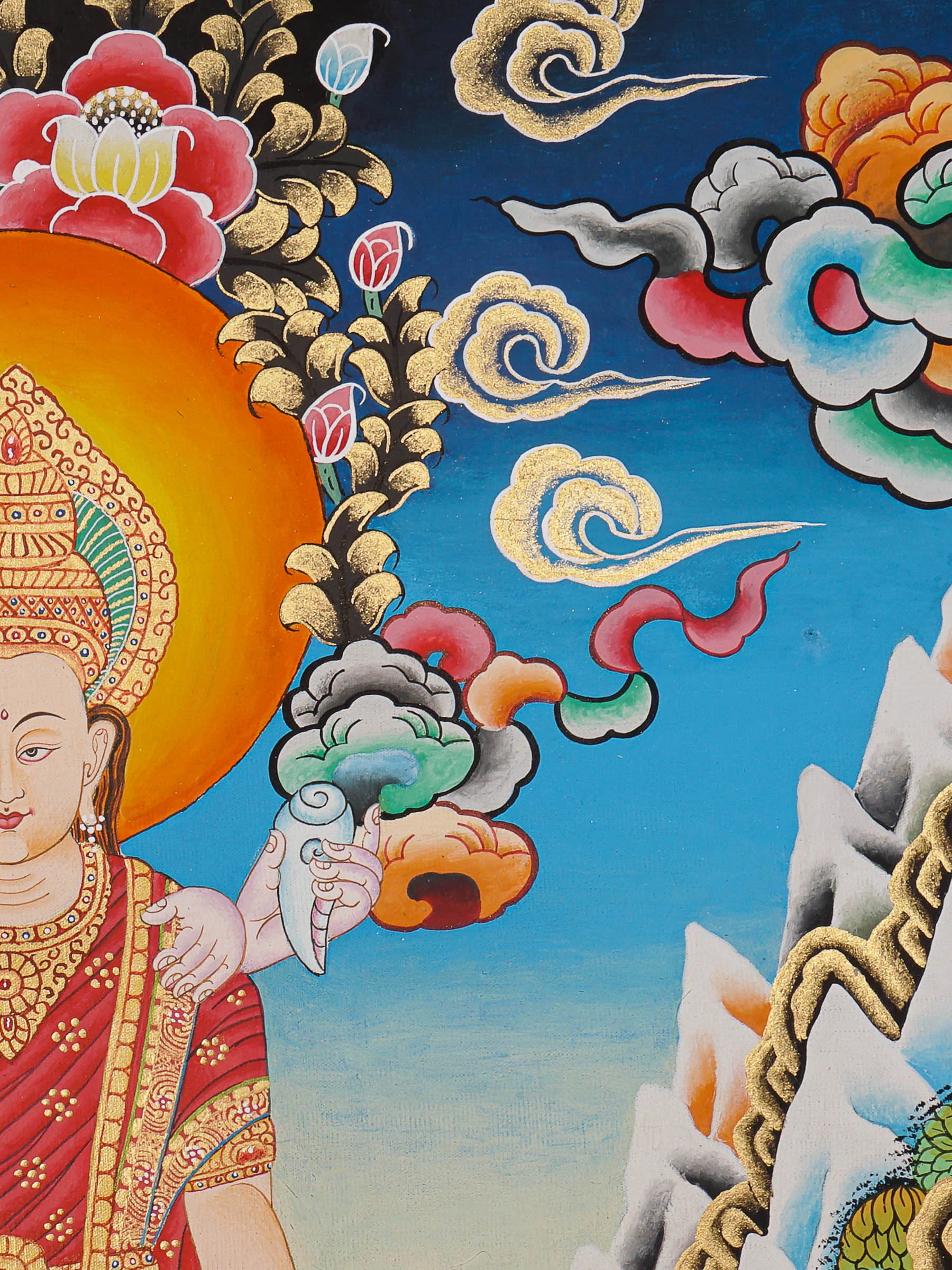
- Aureole or Halo: Shiva and Shakti are depicted with a radiant aureole or halo, representing their divine and enlightened nature. This symbol serves to highlight their status as divine beings.
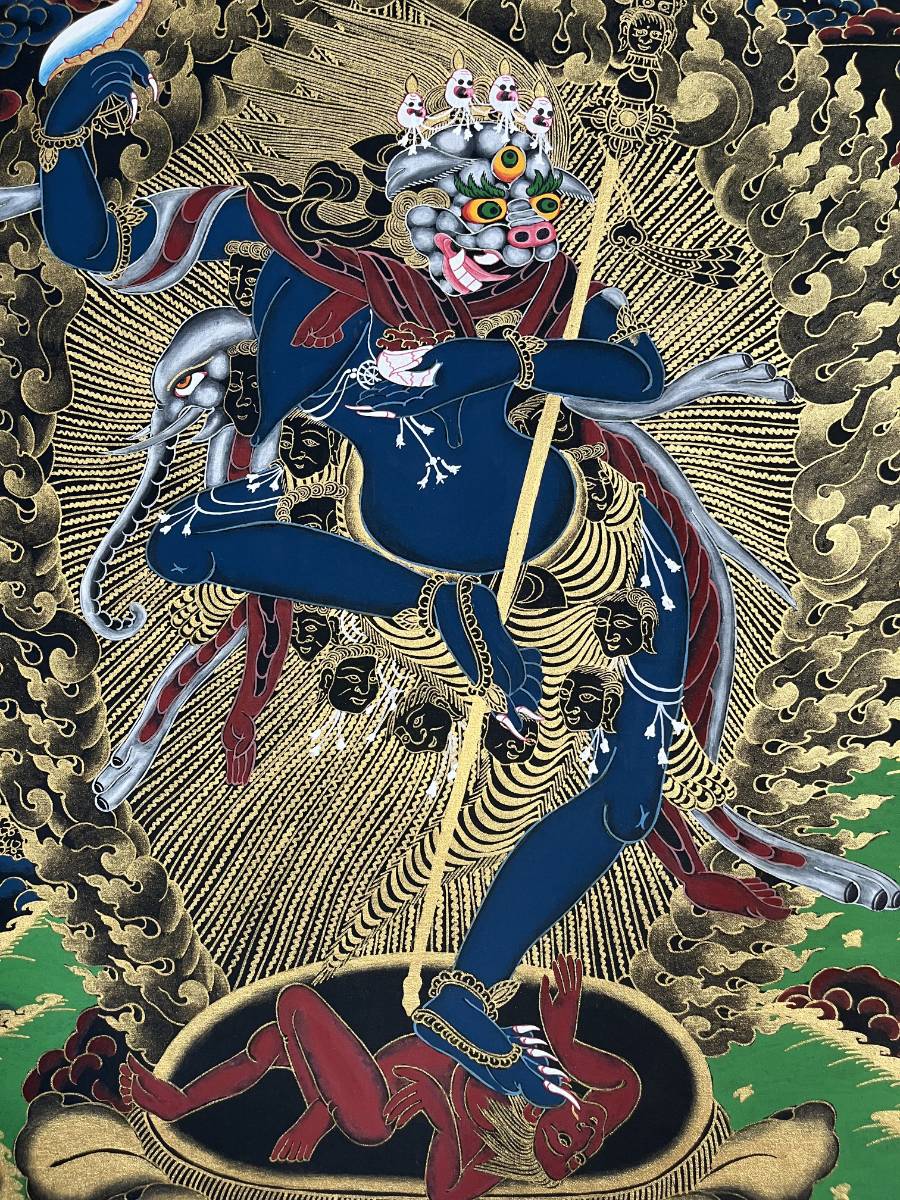
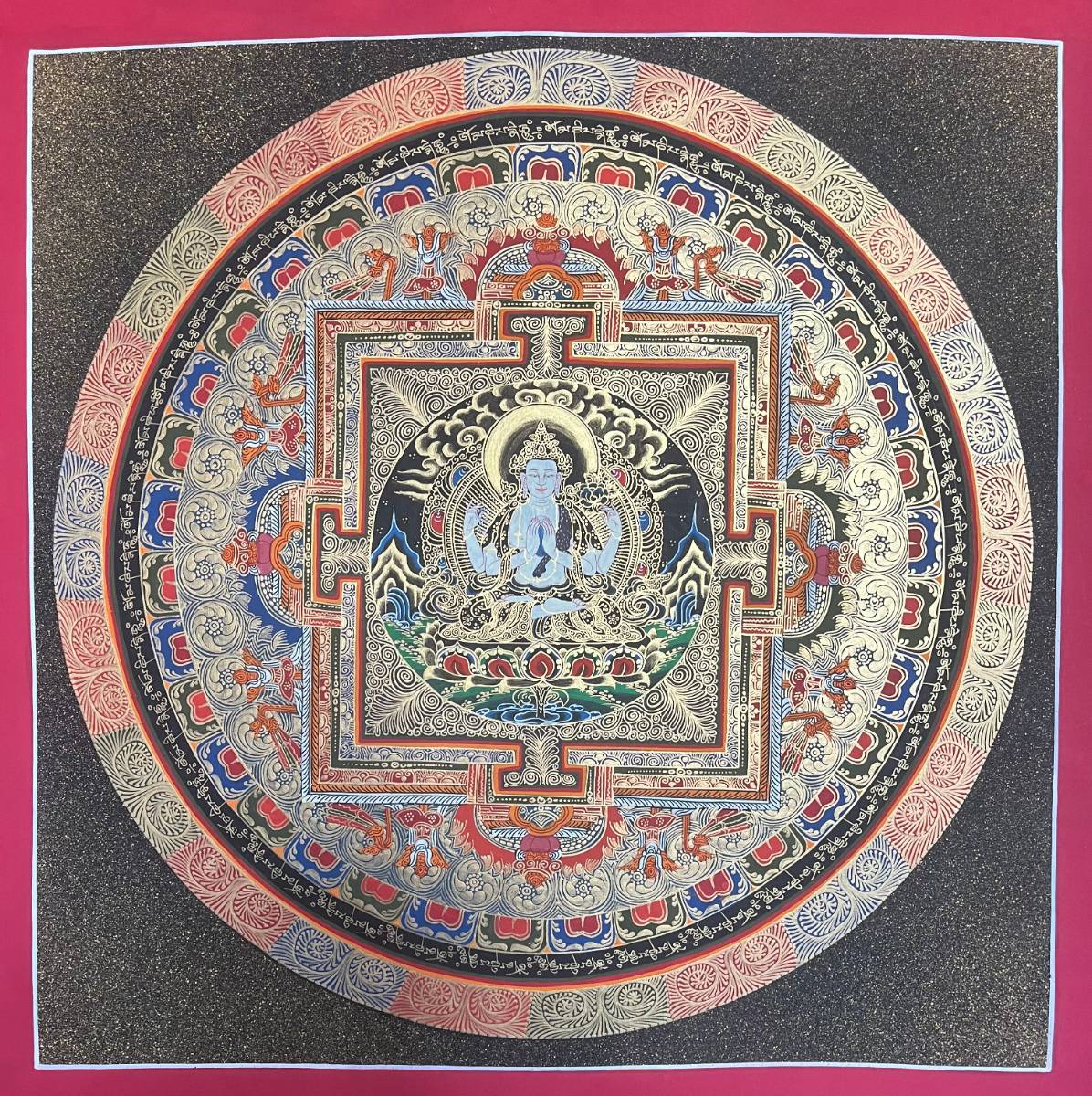
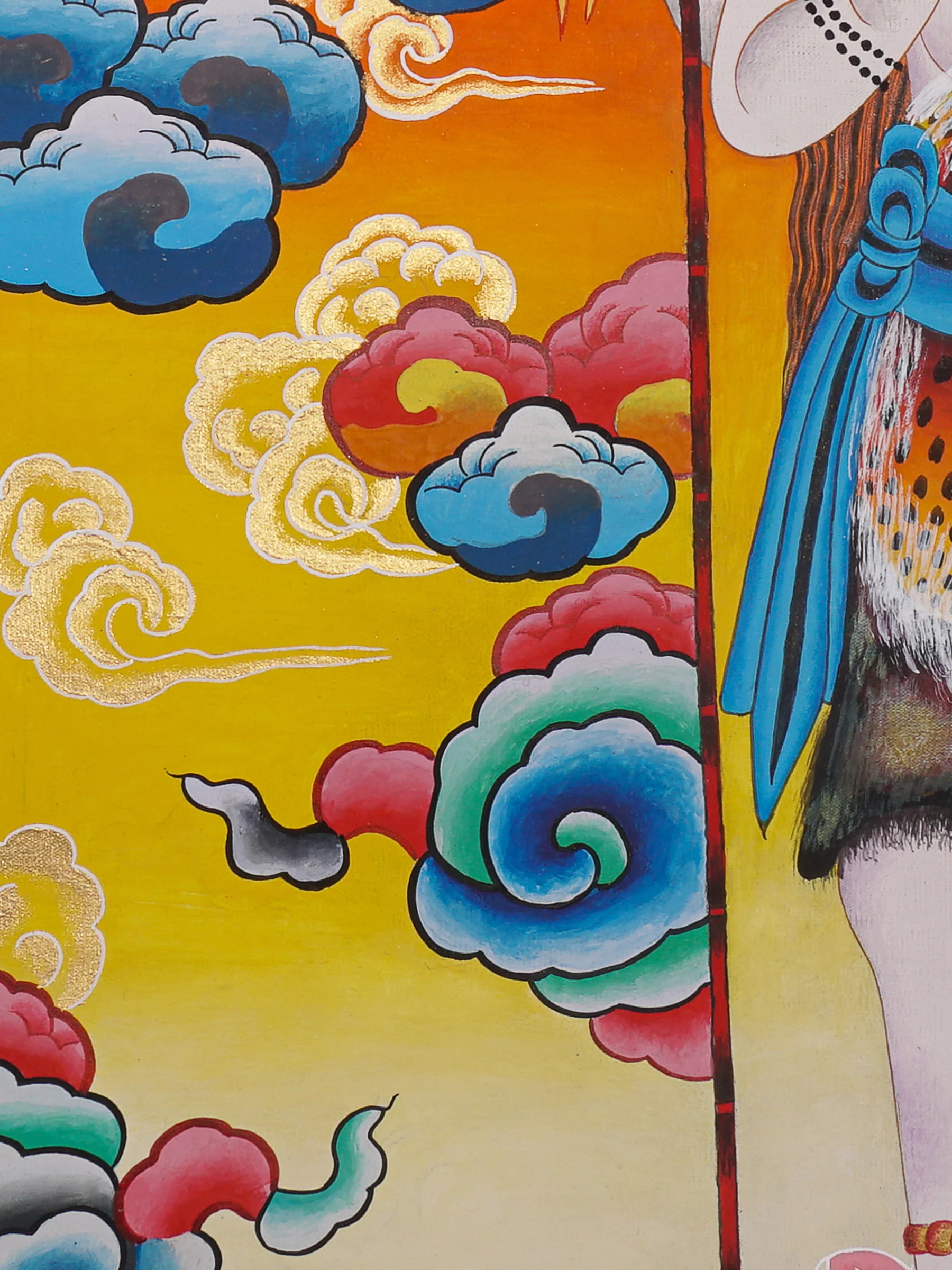
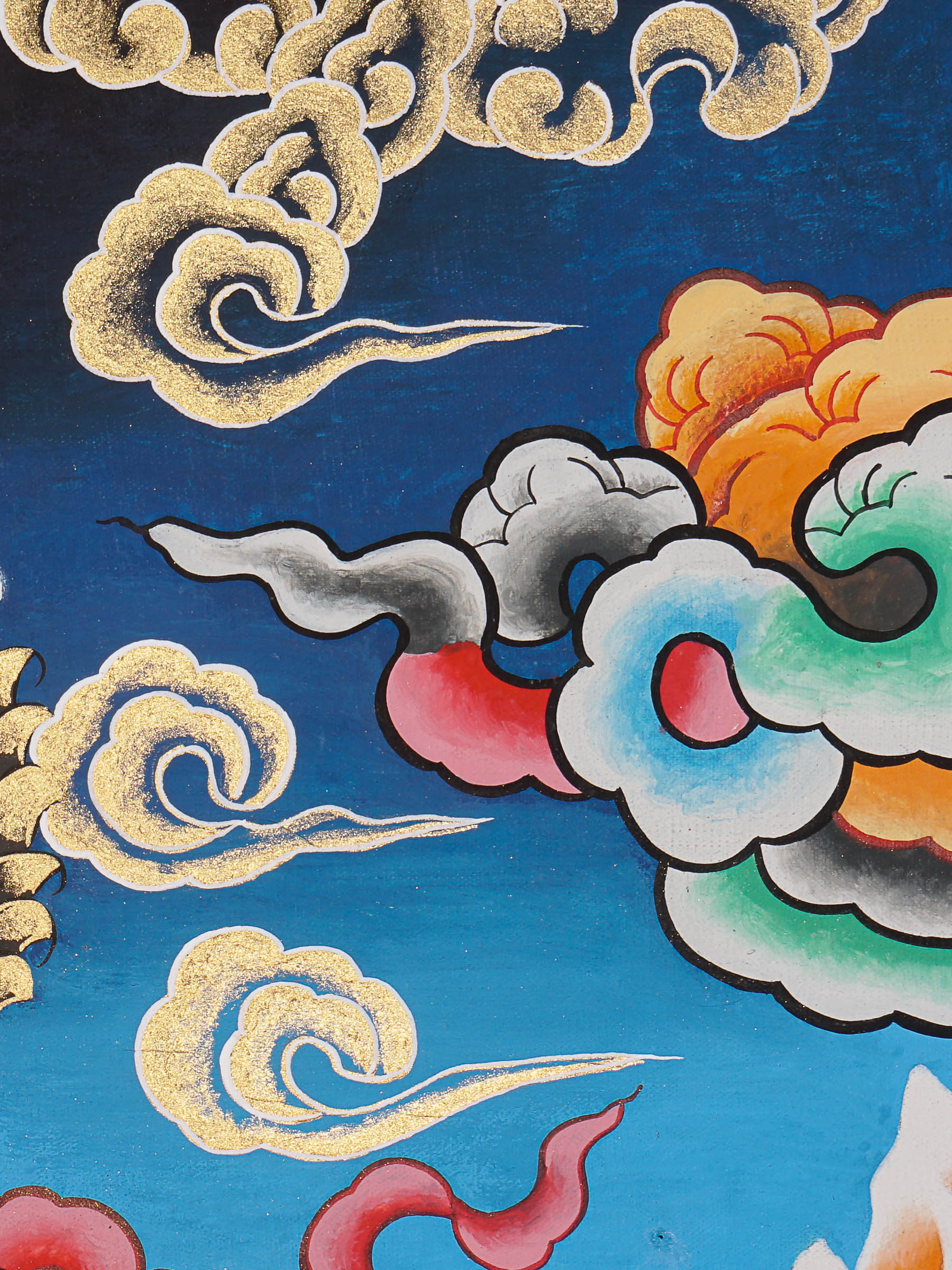
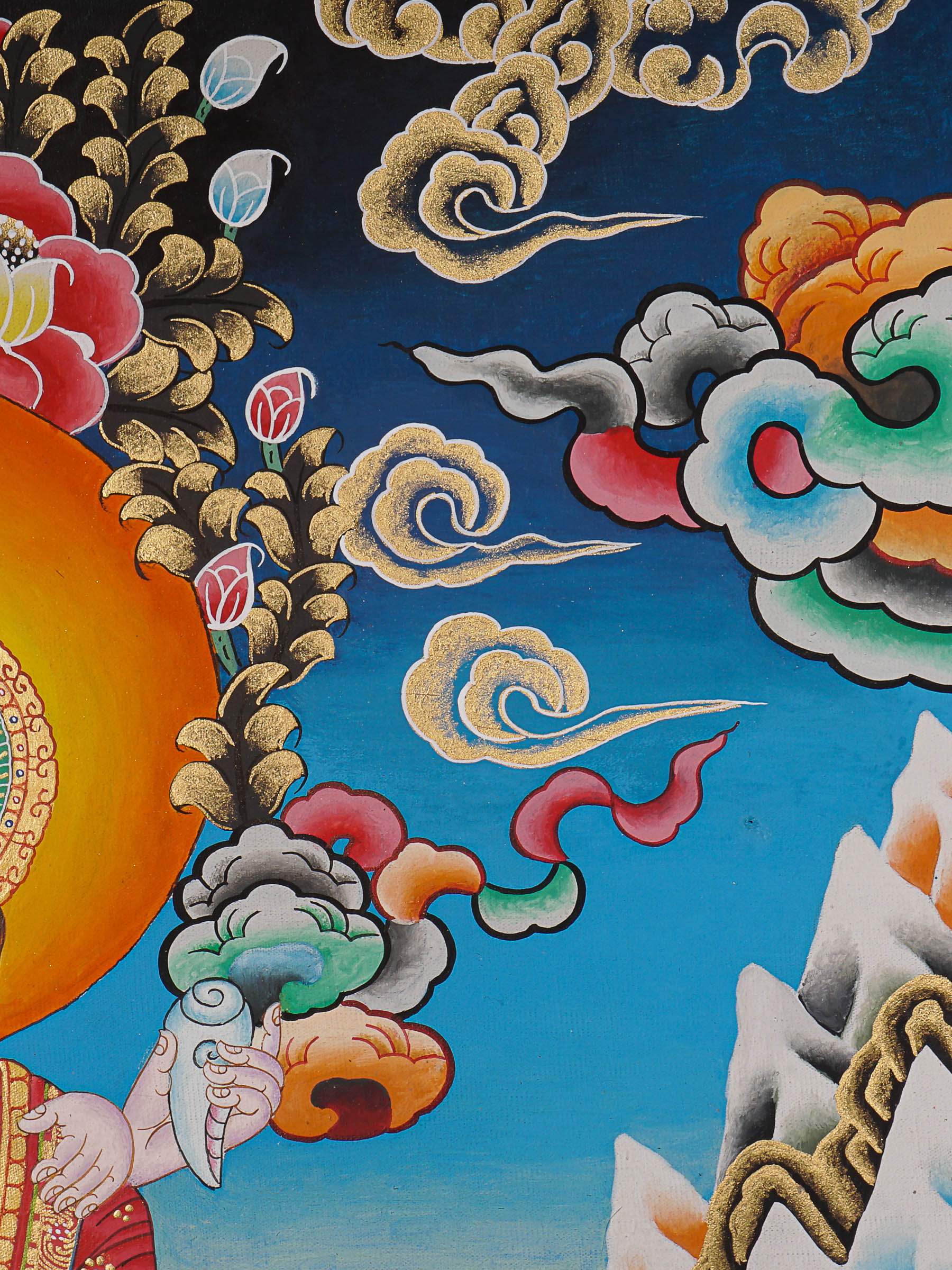
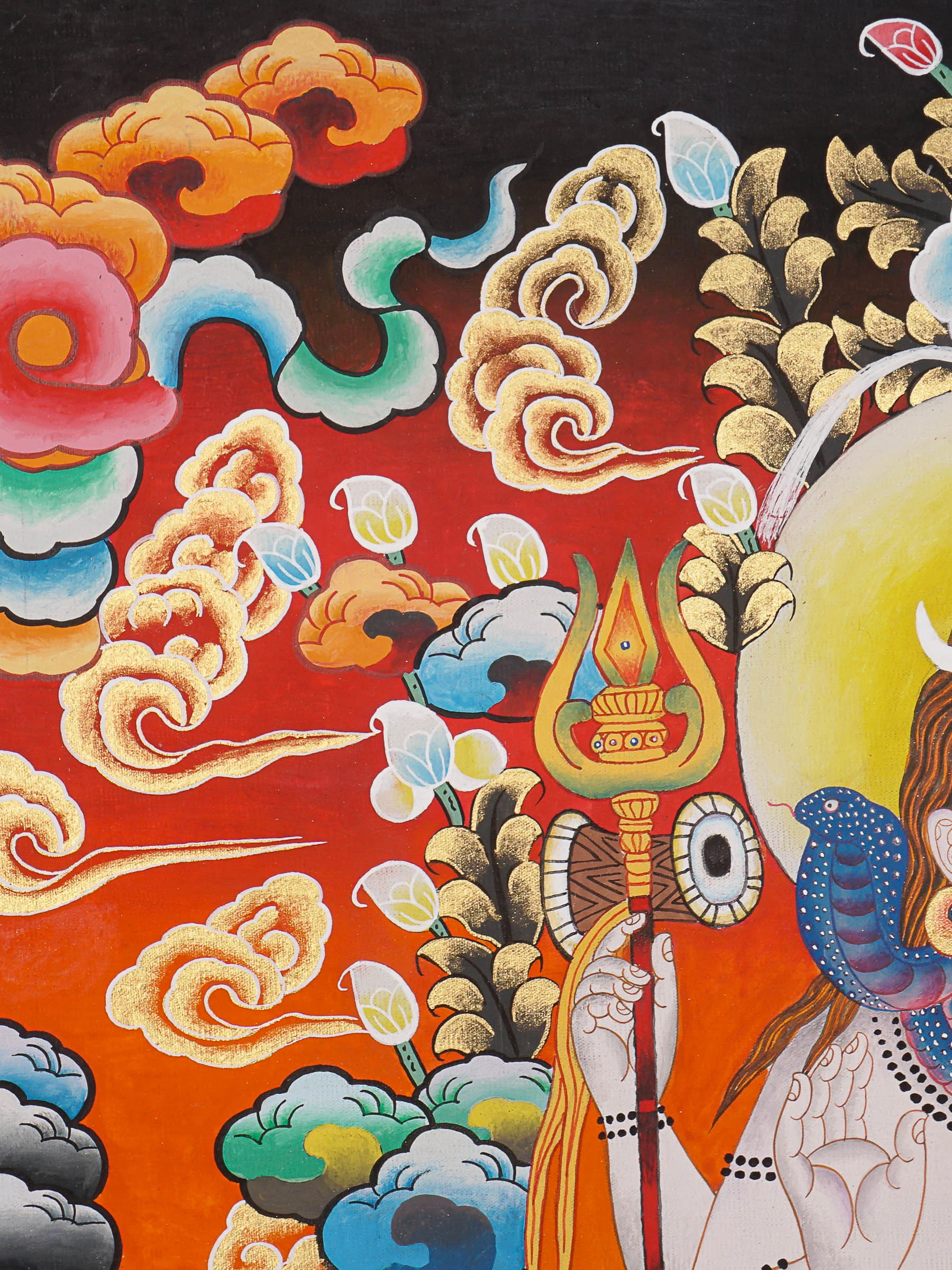
- Detailed Ornamentation: The artwork features lavishly adorned figures wearing intricately designed attire and embellished with jewelry and symbolic objects, showcasing the artist's exceptional craftsmanship and spiritual dedication.
Product Specification:
- Hand Painted
- Size: 68 cm x 43 cm
- Base: Cotton Canvas
- Origination: Nepal
More Images
Shiva Shakti Thangka
The Shiva Shakti Thangka is a revered piece of art portraying the divine union of Shiva and Shakti according to the Tibetan Buddhist customs. This traditional depiction serves as a representation of the harmonious equilibrium between masculine and feminine forces, with Shiva representing destruction and transformation while Shakti symbolizes creativity and vitality.
Key Features:
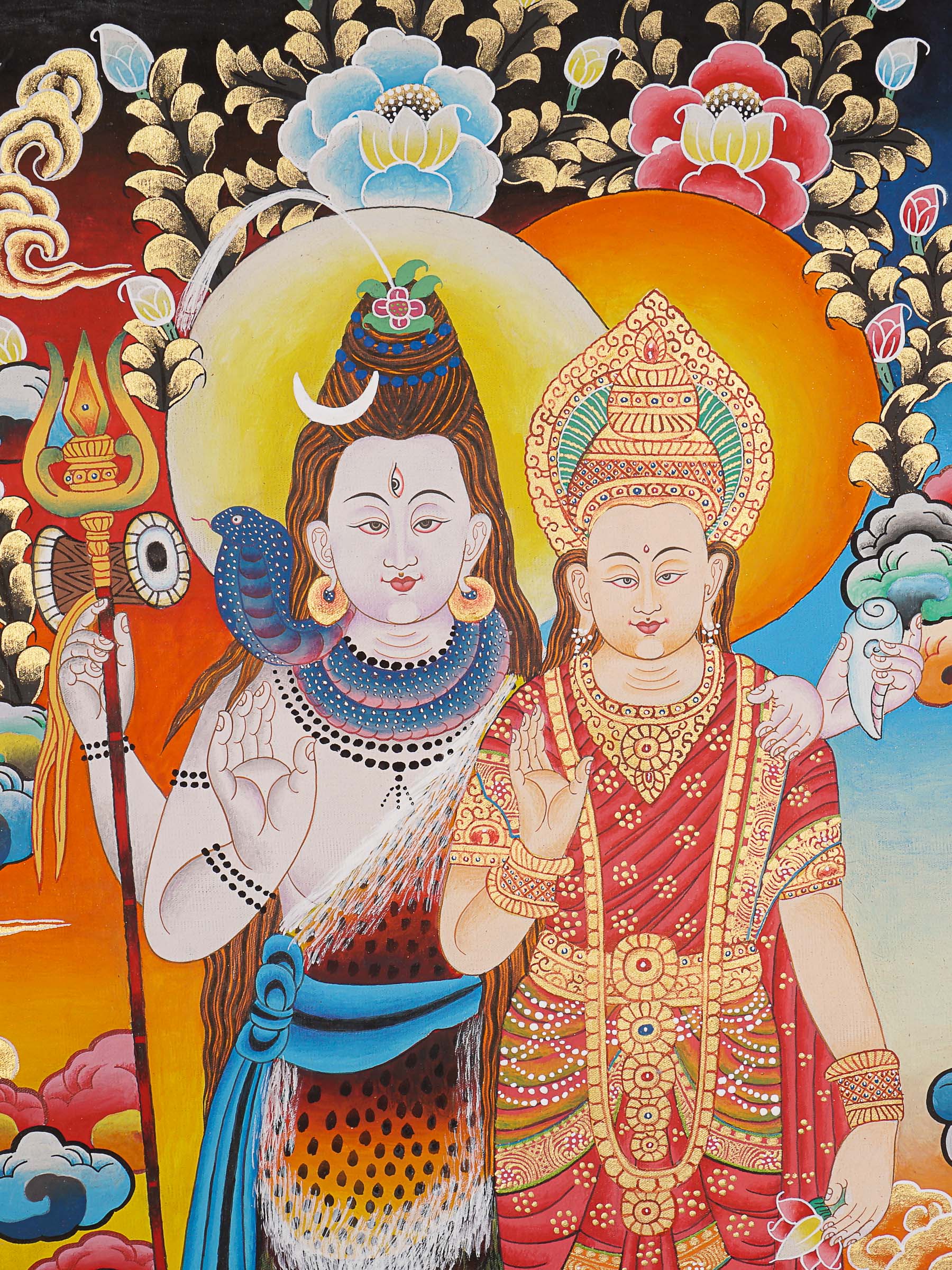
- Central Figures - Shiva and Shakti: The painting highlights the beloved Shiva and Shakti in a loving embrace, representing their inseparable and complementary bond. Shiva has a serene and calm appearance, while Shakti radiates with lively energy.
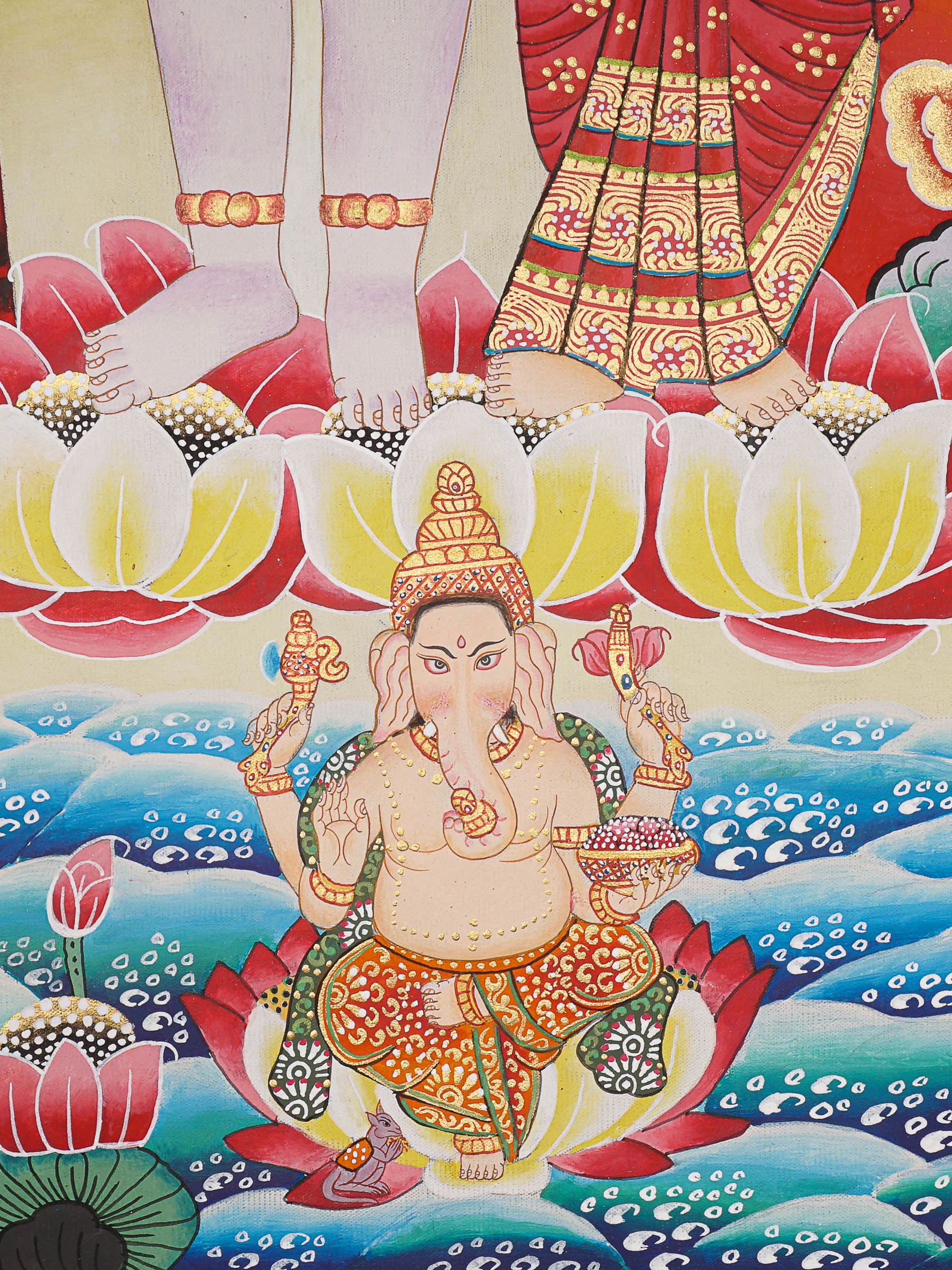
- Lotus Throne:Both figures are depicted standing on a lotus throne, representing purity, enlightenment, and the progression of spiritual awareness.
- Aureole or Halo: Shiva and Shakti are depicted with a radiant aureole or halo, representing their divine and enlightened nature. This symbol serves to highlight their status as divine beings.
- Detailed Ornamentation: The artwork features lavishly adorned figures wearing intricately designed attire and embellished with jewelry and symbolic objects, showcasing the artist's exceptional craftsmanship and spiritual dedication.
Product Specification:
- Hand Painted
- Size: 68 cm x 43 cm
- Base: Cotton Canvas
- Origination: Nepal
Product Information
Product Information
Shipping & Returns
Shipping & Returns
Description
The Shiva Shakti Thangka is a revered piece of art portraying the divine union of Shiva and Shakti according to the Tibetan Buddhist customs. This traditional depiction serves as a representation of the harmonious equilibrium between masculine and feminine forces, with Shiva representing destruction and transformation while Shakti symbolizes creativity and vitality.
Key Features:
- Central Figures - Shiva and Shakti: The painting highlights the beloved Shiva and Shakti in a loving embrace, representing their inseparable and complementary bond. Shiva has a serene and calm appearance, while Shakti radiates with lively energy.
- Lotus Throne:Both figures are depicted standing on a lotus throne, representing purity, enlightenment, and the progression of spiritual awareness.
- Aureole or Halo: Shiva and Shakti are depicted with a radiant aureole or halo, representing their divine and enlightened nature. This symbol serves to highlight their status as divine beings.
- Detailed Ornamentation: The artwork features lavishly adorned figures wearing intricately designed attire and embellished with jewelry and symbolic objects, showcasing the artist's exceptional craftsmanship and spiritual dedication.
Product Specification:
- Hand Painted
- Size: 68 cm x 43 cm
- Base: Cotton Canvas
- Origination: Nepal